


Every
child learns about the world through their senses, by touching, seeing,
hearing, tasting, and smelling. In Montessori
education, this natural curiosity is nurtured through carefully designed
sensorial activities. These activities don’t just stimulate the senses; they
shape how a child perceives, understands, and categorizes their environment.
Dr Maria
Montessori observed that children between birth and six years live in a period
of the absorbent mind, a stage when they learn effortlessly through direct
sensory experience. To her, the senses were the child’s first tools for
exploration and discovery.
“The
training and sharpening of the senses have the obvious advantage of enlarging
the field of perception and of offering an ever more solid foundation for
intellectual growth”- Dr Maria Montessori mentions in her book, “The Discovery
of the Child”
This
insight captures the essence of sensorial
education: that knowledge begins with experience. Through sensorial
materials and activities, Montessori classrooms help children refine their
senses, build focus, and develop the ability to think clearly and critically
about the world around them.
What Exactly Are Sensorial Activities in Montessori Education?
Sensorial
activities are purposeful exercises designed to help children refine and
categorise sensory impressions. They allow children to isolate and explore one
sensory property at a time, such as colour, weight, texture, sound, or
temperature.
In
essence, sensorial education helps
children learn how to observe, compare, classify, and reason, skills that form
the foundation for future academic learning.
Montessori’s Philosophy on Education Through the Senses
Dr
Montessori believed that learning begins with the senses. Before a child can
understand abstract ideas, they must first experience them concretely. She
wrote:
“The senses, being explorers of the world, open the way to
knowledge.”- Dr Maria Montessori.
This
philosophy highlights the Montessori approach: education rooted in exploration
and hands-on discovery, not rote memorization.
What Is the Role of Sensorial Activities in Montessori Education?
Montessori Education and the Sensorial Area
In a
Montessori classroom, the sensorial area
is a dedicated space filled with beautiful, precise materials, each designed to
isolate a specific sensory quality. Here, children learn by doing rather than
being told, engaging their whole body and mind.
Why Sensorial Experiences Are Foundational
The
sensorial area bridges early sensory exploration and higher intellectual
development. It helps children develop the power of observation, judgement,
and decision-making. These are not just academic skills but essential life
skills that foster awareness and intelligence.
Early
sensorial experiences also prepare the child’s mind for more complex subjects
like mathematics and language by training them to notice details, patterns, and
relationships.
Why Are Sensorial Activities Important for a Child’s Development?
Refining the Senses
Sensorial
activities fine-tune a child’s senses, sight, hearing, touch, smell, and taste,
making them more perceptive and aware of the nuances in their environment.
Connection to Cognitive, Motor, and Academic Readiness
Each
activity integrates sensory input with movement, stimulating both the body and
brain. Sorting, matching, and grading exercises enhance hand-eye coordination
and fine motor control, skills vital for writing and mathematics.
Foundation for Mathematics, Reading, and Writing
Sensorial
materials indirectly prepare children for academics:
·
Grading cylinders introduces
comparison and sequencing (math concepts).
·
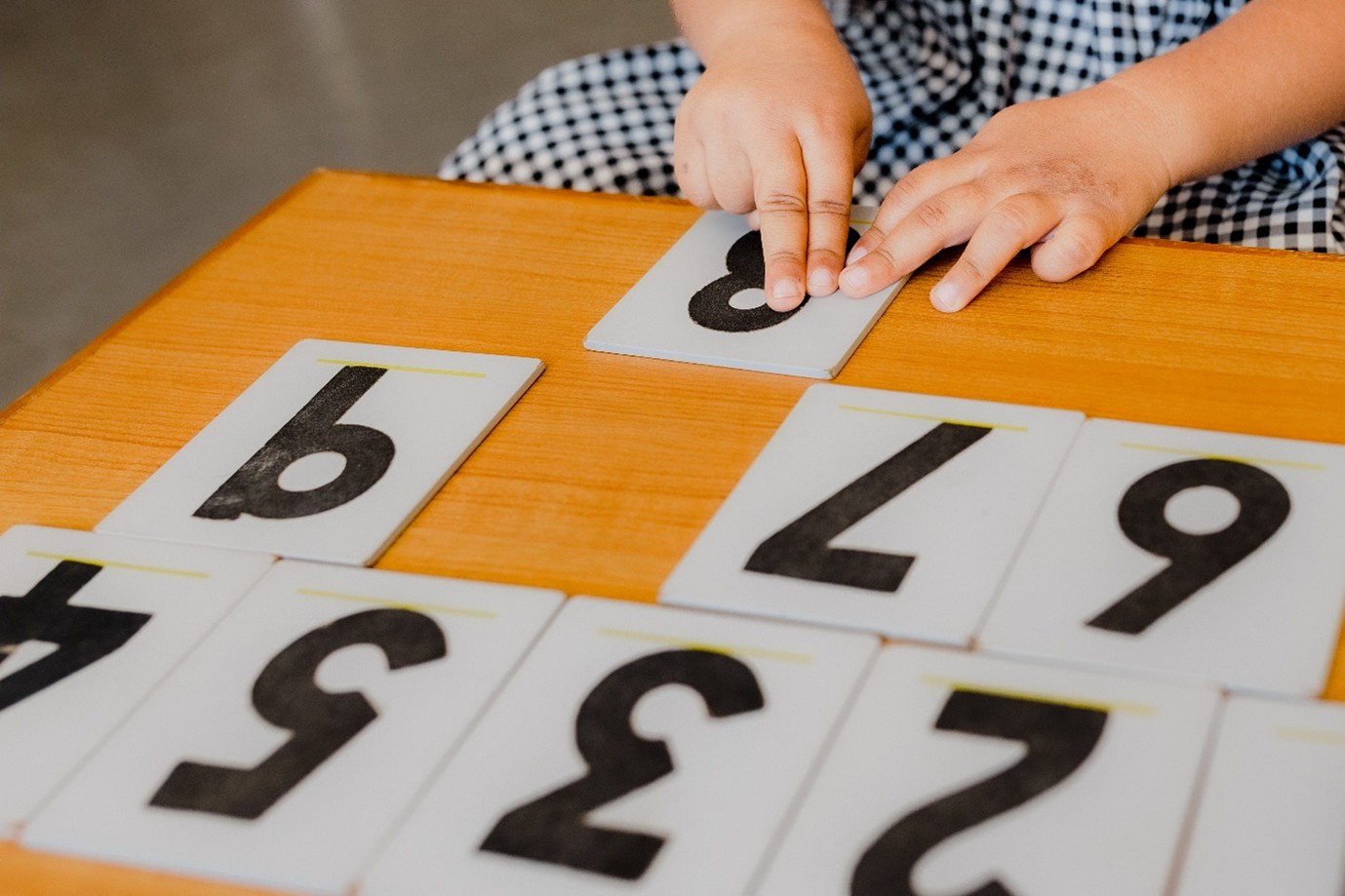
Sandpaper letters connect tactile
sensation with phonetic sounds (reading readiness).
·
Tracing shapes strengthens fine
motor control (writing preparation).
By
engaging the senses first, Montessori education ensures that learning is
grounded in experience, not abstraction.
What Are the Different Types of Montessori Sensorial Activities?
Each
sense is engaged and refined through specific materials and exercises.
What Are Visual (Sight) Activities?
These develop the sense of visual
discrimination, identifying and categorising differences in size, shape, and
colour.
Examples:
Pink Tower, Brown Stair, Colour Tablets, Geometric Solids.
Children learn to compare, order, and
classify based on visual attributes like height, width, and shade.
What Are Auditory (Hearing) Activities?
These exercises help children distinguish
between different sounds, tones, and pitches.
Examples:
Sound Cylinders, Bells, and Mystery Sound Boxes.
Through repetition, children sharpen
listening skills, a foundation for language development and musical
appreciation.
What Are Tactile (Touch) Activities?
These focus on differentiating textures and
temperatures through touch.
Examples:
Fabric Box, Rough and Smooth Boards, Touch Tablets.
Children learn to recognise sensations,
soft vs. coarse, smooth vs. rough, building vocabulary and sensory memory.
What Are Olfactory (Smell) Activities?
These exercises refine the sense of smell.
Examples:
Smelling Bottles filled with scents like coffee, cinnamon, or flowers.
Children match identical smells or
identify specific scents, building awareness of their surroundings.
What Are Gustatory (Taste) Activities?
Taste activities help children distinguish
between sweet, sour, salty, and bitter.
Examples:
Tasting Jars and simple food tasting sessions.
They encourage curiosity about food and
develop polite eating habits.
What Are Baric (Weight) Activities?
Baric
exercises train children to differentiate between heavy and light objects.
Examples:
Baric Tablets made of different materials like wood and metal.
These activities help children refine
their sense of judgement and comparison.
What Are Thermic (Temperature) Activities?
Thermic
materials teach children to identify temperature variations by touch.
Examples:
Thermic Bottles or Thermic Tablets.
Children develop awareness of warmth and
coolness, an important part of their sensory vocabulary.
What Sensorial Materials Are Used in Montessori Classrooms?
Montessori
materials are specifically crafted to isolate one concept or quality. Each has
a control of error, allowing
children to self-correct.
Some
iconic sensorial materials include:
·
Pink Tower: Teaches weight, visual
discrimination of size and kinesthetic sense to hold.
·
Brown Stair: Focuses on thickness
and dimension.
·
Colour Tablets: Encourage
recognition and grading of colours.
·
Cylinder Blocks: Develop
coordination and comparison of size and depth.
·
Geometric Solids: Introduce 3D
shapes and geometry vocabulary.
·
Sound Cylinders: Build auditory
memory through paired matching.
·
Smelling Bottles: Refine olfactory
senses.
·
Thermic Tablets: Help identify
temperature differences.
Each
material is scientifically prepared with a purpose, precise, hands-on,
beautiful, and child-sized, encouraging exploration and respect.
How Do Sensorial Activities Support Brain and Skill Development?
Executive Functioning, Reasoning, and Focus
Sensorial
work strengthens attention span and problem-solving. Sorting or matching tasks
require planning, observation, and logical reasoning, skills essential for
academic success.
Language Enrichment
Children
are introduced to descriptive vocabulary, big, small, rough, smooth, heavy,
light, which enhances communication and comprehension. This linguistic
precision connects directly to reading and writing fluency.
Encouragement of Independence and Self-correction
Sensorial
materials are self-correcting; a child instantly sees if the Pink Tower or
Cylinders are misaligned. This fosters intrinsic motivation, independence, and
perseverance.
What Are Some Examples of Sensorial Activities by Age Group?
What Sensorial Activities Are Suitable for Ages 0–3?
In the
first three years, children explore freely using all senses.
·
Simple matching baskets (textures
or objects)
·
Shakers with different sounds
·
Soft fabrics or textured balls
·
Taste and smell games during snack
time
At this
stage, the emphasis is on sensory exploration and coordination.
What Sensorial Activities Work Best for Ages 3–6?
This is
the prime Montessori period for sensorial refinement.
·
Pink Tower and Brown Stair for
visual perception
·
Sound Boxes for auditory
discrimination
·
Fabric Matching for touch
·
Thermic and Baric Tablets for
temperature and weight recognition
Children
begin categorizing and naming sensory qualities, building vocabulary and
reasoning.
What Advanced Sensorial Activities Are There for Ages 6+?
Older
children apply sensory experiences to abstract thinking.
·
Geometry activities (from solid to
plane shapes)
·
Music and rhythm matching
·
Advanced colour mixing
·
Scent identification games linked
with botany or geography
These
build connections between concrete experience and abstract reasoning, bridging
sensory work to academics.
How Do Sensorial and Practical Life Activities Differ in Montessori?
Key Differences:
● Purpose: Practical Life develops coordination and independence through everyday
tasks; Sensorial focuses on refining the senses.
●
Materials: Practical Life uses real
household tools; Sensorial uses Montessori-designed materials.
● Outcome: Practical Life builds confidence and routine; Sensorial builds
perception and classification skills.
Which Comes First?
Typically, Practical Life activities precede Sensorial work. Once children develop coordination and focus through practical life, they are ready for more refined sensorial exploration.Shared Goal:
Both aim to
prepare the child’s mind and body for higher learning through independence,
order, and concentration.
How Can Parents Create Montessori Sensorial Activities at Home?
Parents
can easily adapt sensorial principles using everyday materials.
DIY Ideas Using Common
Household Items
● Visual: Colour sorting with buttons or beads.
● Auditory: Homemade shakers using rice, beans, or coins.
● Tactile: Texture boards with sandpaper, fabric, or foil.
● Olfactory: Spice-smelling jars.
● Gustatory: Taste-testing fruits or condiments.
Maintaining Montessori Principles at Home
● Keep activities simple and purposeful.
● Use real, natural materials whenever possible.
● Present one concept at a time (e.g., only colour or texture).
● Allow repetition, don’t rush to change activities.
Presentation Tips for Parents
● Demonstrate slowly, without excessive talking.
● Allow your child to explore independently.
● Maintain a clean, organised space, clarity supports focus.
Bright Future for Kids with Sensory Activities for Learning
Sensorial
activities in Montessori education are far more than sensory play; they are the
foundation of intellectual development. By refining their senses, children
learn to perceive, compare, and understand the world around them. Through
sensorial education, children don’t just learn about the world; they learn how
to think, observe, and appreciate its beauty.
At Vidyanjali Academy, sensorial education is at the heart of our Montessori-inspired classrooms. Every material, activity, and interaction is thoughtfully designed to awaken a child’s natural curiosity and refine their senses. If you’re looking for a nurturing environment where your child can explore, discover, and grow through authentic Montessori experiences, Vidyanjali Academy is the ideal place to begin.
Schedule a school visit or connect with our admissions team today, to learn how Vidyanjali’s Montessori programme nurtures confident, capable, and curious young learners.
Are Sensorial Activities Only for Preschoolers?
No.
Although the sensorial period peaks between ages 3 - 6, sensory-based learning
benefits all ages. Older children and even adults refine perception and
creativity through multisensory experiences.
How Do I Know If a Sensorial Activity Is Effective?
Watch for
engagement and repetition. If a child repeats an activity joyfully, they are
learning. Effectiveness is measured by concentration, curiosity, and
satisfaction, not just outcomes.
What’s the Difference Between Sensory Play and Montessori Sensorial Work?
Sensory
play is exploratory and unstructured, while Montessori sensorial work is purposeful
and focused. Each Montessori activity isolates one sense and has a learning
objective, often with built-in self-correction.