
At
Vidyanjali Academy for Learning, literacy is not treated as a subject; it is
treated as a foundation. From the early years onwards, our classrooms are
designed to nurture confident readers and expressive writers through a blend of
phonics, storytelling, handwriting practice, and creative language work. We
believe that strong reading and writing skills are not just academic tools, but
essential life skills that shape how a child thinks, communicates, and
succeeds.
Why Early Literacy Matters
Strong
reading and writing skills support cognitive development, help children process
and express ideas clearly, and set the stage for success across subjects.
Studies show that early literacy is directly linked to long-term educational
outcomes, including stronger performance in middle school, high school, and
beyond.
A Shared Responsibility
Building
these skills is not just the child’s responsibility. Teachers, schools, and
parents each play a critical role:
●
Teachers design structured, engaging lessons that build vocabulary, comprehension, and writing
fluency. Teacher plans Special Classes and provide Personalized story
cards for children.
●
Schools provide the right environment, with access to quality reading
materials, trained staff, and flexible learning strategies.
●
Parents reinforce these habits at home by reading with their children,
encouraging storytelling, and supporting practice through daily routines.
Vidyanjali Academy’s Approach
At
Vidyanjali Academy for Learning, we take a balanced, research-backed approach
to literacy. Our classrooms blend phonics-based instruction, guided reading,
and creative writing opportunities within a Montessori-informed environment
that supports choice, curiosity, and confidence.
We don’t
just teach children to read and write; we help them enjoy reading and writing,
so they carry these skills with them for life.
Why Are Reading and Writing Skills Important in Primary School?
Reading
and writing are the basic skills children use to understand almost everything
else in school. Strong literacy supports cognitive development by improving
attention, memory, comprehension, and the ability to organise thoughts. It also
strengthens communication; children learn how to express ideas clearly, ask
better questions, and participate more confidently in class discussions.
These
skills also shape academic success across subjects. When children can read
instructions, understand word problems, summarise lessons, and write short
answers with clarity, they perform better not just in language but also in
math, science, and social studies.
Over
time, the impact becomes even more significant. Children who build solid
reading and writing habits in primary school tend to keep up more easily as the
curriculum becomes more complex. At the same time, those who struggle early
often find learning more stressful across the board. That’s why primary years
are the best time to strengthen literacy, because it supports both current
learning and long-term educational outcomes.
What Are the Key Stages of Reading and Writing Development in Children?
Reading
and writing skills do not develop all at once; they progress gradually,
building on each other across age groups. At Vidyanjali Academy, we support
this process through intentional exposure, rich language experiences, and
structured strategies.
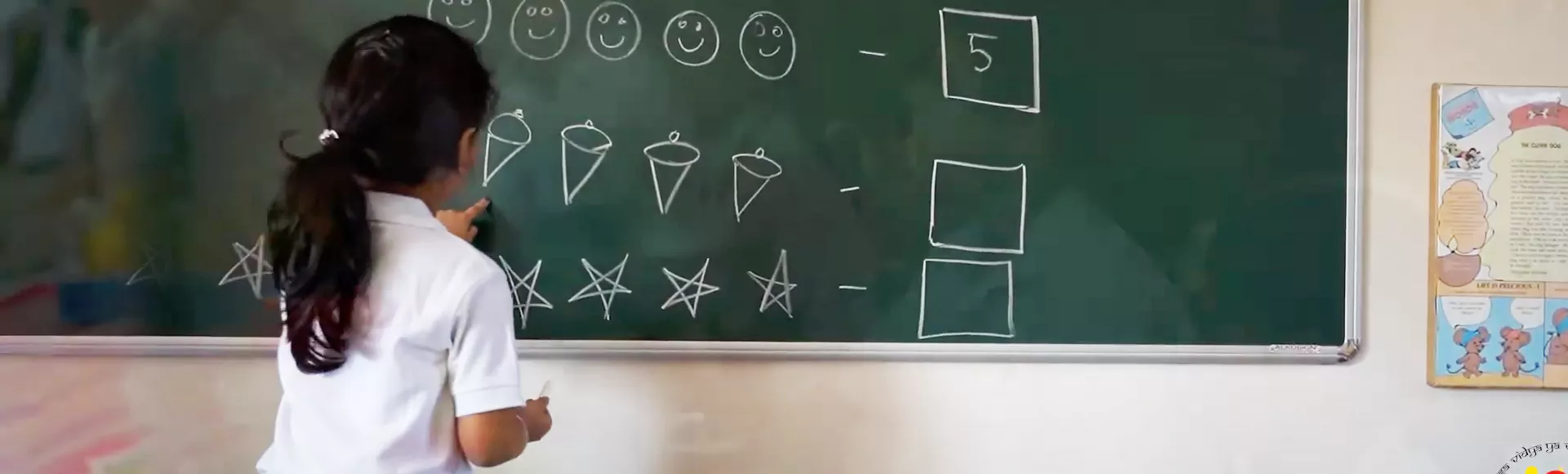
Emergent Literacy (Ages 3–6)
In the
early years, children begin recognising sounds, letters, and symbols. They
explore books through storytelling, picture walks, and phonetic games using
Montessori materials such as sandpaper letters and movable alphabets. Early
writing often develops alongside fluent reading, as children build muscle
memory and sound–symbol association.
Early Readers & Writers (Grades 1–3)
At this
stage, children begin decoding and constructing simple texts. Daily reading,
phonics, and shared writing activities help them move from sounding out words
to understanding meaning. Writing develops from isolated words into full
sentences and short paragraphs.
Fluent Readers & Writers (Grades 4–5)
By now,
children read for meaning and write to express ideas. They engage with longer
texts, interpret themes, and write across genres. Vocabulary expands rapidly,
and comprehension becomes central to reading instruction.
Literacy Milestones by Grade
Reading
and writing develop step by step, and the “right” pace can look slightly
different for every child. At Vidyanjali Academy, we track these milestones
through everyday classroom work so families can understand where a child is
progressing and where support may help:
●
Age 4–5: Can recognise letters, identify sounds, and retell simple stories
●
Age 6–7 (Grade 1): Begins blending sounds, reading short sentences, and forming basic
written thoughts
●
Age 8–9 (Grades 2–3): Read short books independently and write with structure and clarity
●
Age 10–11 (Grades 4–5): Read with fluency, analyse texts, and write for a range of purposes
How Can Teachers Improve Reading Skills in Primary Classrooms?
At
Vidyanjali, we use a blend of daily reading routines, expressive read-alouds,
guided reading, and phonics support to build confident, thoughtful readers.
Children engage with books every day by listening, reading aloud, and working
in small groups to strengthen decoding and comprehension. Techniques such as
SQ3R, predictive questioning, and picture walks are woven into lessons to make
reading active, structured, and engaging from the start.
What Strategies Help Primary Students Build Strong Writing Skills?
At
Vidyanjali Academy, we use a blend of classroom strategies and home-based
support to help young learners become confident, expressive writers. Writing is
not treated as a mechanical skill; it is developed through meaningful and
enjoyable practice across multiple formats.
In the Classroom
●
Writing prompts imagination and helps children overcome the fear of the blank page. Prompts are
designed to be relatable and developmentally appropriate, encouraging original
ideas and thoughtful expression.
●
Creative writing allow students to write freely about their thoughts, stories, or
daily observations. This builds fluency and a sense of ownership over their
voice.
●
Sentence formation and
grammar exercises are taught in context rather than
in isolation. Children learn how language works by building sentences that are
purposeful and connected to what they read or observe.
●
Peer feedback and group
writing activities encourage collaboration, active
listening, and revision. Students learn to give and receive feedback with
respect, making writing a shared and dynamic process.
●
Reading–writing integration strengthens comprehension and vocabulary. Students often write
about what they read through summaries, character reflections, or alternative
endings, reinforcing both skills.
At Home
Parents
play a powerful role in supporting literacy beyond the classroom. We encourage
simple, consistent habits that create a language-rich environment:
●
Home reading routines, such as
reading aloud together every night, build listening skills, vocabulary, and
awareness of story structure.
●
Word games and storytelling
make language playful. Whether it is rhyming games, picture-based stories, or
“finish the sentence” games, these activities keep reading and writing
enjoyable.
●
Parent–teacher collaboration
ensures that strategies stay aligned. We guide parents on what to reinforce at
home based on what the child is learning at school.
●
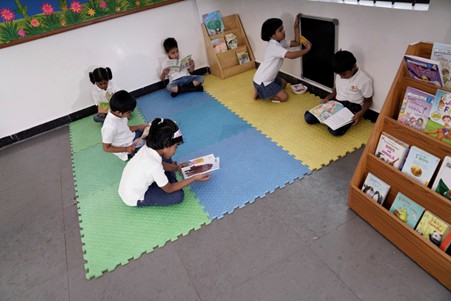
Reading nooks at home provide a
quiet and inviting space for independent reading and reflection. When children
associate reading and writing with comfort and calm, they are more likely to
return to these activities.
What Role Does Technology Play in Enhancing Reading and Writing in Young Learners?
At
Vidyanjali Academy, we see technology as a supportive tool rather than a
replacement for foundational reading and writing skills. When used
thoughtfully, it enhances engagement, supports different learning styles, and
makes literacy more accessible for young learners.
Tools
such as Raz-Kids, Epic, and interactive whiteboards make lessons engaging and
adaptable to each child’s level. Audiobooks and read-along e-books build
vocabulary and comprehension, while blended platforms offer personalised
practice and progress tracking. When used carefully, technology strengthens
literacy while keeping real-world language development at the core.
What Are Common Challenges Children Face in Learning to Read and Write?
Even in
the best environments, some children need extra support. At Vidyanjali Academy,
we stay aware of the most common hurdles so we can intervene early and
empathetically:
●
Dyslexia and learning
differences can affect how children process sounds,
letters, and written language. Early identification and tailored strategies are
essential.
●
Lack of motivation or
exposure, especially when books are not part of a
child’s home life, can slow progress. We address this by making reading
relevant, enjoyable, and student-driven.
●
Limited vocabulary may result from restricted language use at home or in social
settings. Daily conversation, storytelling, and vocabulary-building games help
bridge this gap.
●
Attention span challenges can make it difficult for some children to sit still and engage
with text. We use movement-based learning and short, multisensory sessions to
keep them involved.
●
Language barriers can affect children who are still acquiring the language of
instruction. Visual aids, peer modelling, and phonics-based tools support
comprehension and confidence.
We treat
every challenge as an opportunity to understand the child better, adjust our
methods, and ensure that reading becomes a joyful and lifelong skill.
How Can Teachers Assess Reading and Writing Progress in Primary Students?
At
Vidyanjali Academy, reading and writing progress is measured through
thoughtful, low-pressure methods that respect each child’s pace. Instead of
relying solely on grades or formal examinations, we focus on meaningful,
ongoing observation.
Formative vs. Summative Assessments
Teachers
use formative assessments, such as in-the-moment observations, individual
reading sessions, and writing drafts, to monitor progress over time. These
approaches help identify needs early and allow teachers to adjust instruction.
When required, summative assessments provide a snapshot of where a student
stands in relation to grade-level goals.
Reading Fluency Checks
Reading
is not only about decoding; it also involves rhythm, tone, and understanding.
Teachers regularly listen to students read aloud to assess fluency, accuracy,
and expression. These informal checks help track progress and identify areas
that need support, such as decoding or comprehension. We are checking reading
fluency as a formal assessment. It is part of HPC from prep to V.
Rubrics for Writing Assignments
Writing
is assessed using simple, age-appropriate rubrics that focus on clarity,
structure, grammar, and creativity. Students are often involved in reviewing
these rubrics so they understand what effective writing looks like and how to
improve.
Portfolios and Journals
Each
student builds a writing portfolio over the year, including stories,
reflections, and practice pieces. Paired with daily journals, these tools give
teachers a clear, personalised view of each child’s development and allow
students to see their own progress as well.
How Do Schools Like Vidyanjali Academy Build Strong Literacy Skills?
At
Vidyanjali Academy for Learning, early literacy is not treated as an isolated
subject; it is embedded in the entire school experience. As one of the leading
Montessori schools in Bangalore, Vidyanjali is recognised for its focus on
language development and its thoughtful, child-centred approach to reading and
writing.
How Does Vidyanjali Stand Out
At
Vidyanjali Academy, early learning is built to support strong literacy without
rushing children or turning reading into pressure. Here’s what we focus on when
looking for a school that takes language development seriously:
1. Holistic Literacy Programmes
From
storytelling corners to phonetic activities, literacy is introduced through
movement, sound, and hands-on exploration. Reading and writing develop together
rather than in isolation.
2. Teacher Training and Development
Our
educators receive ongoing training in Montessori language techniques, early
phonics instruction, and approaches aligned with child psychology. This keeps
classrooms informed, purposeful, and responsive to children’s needs.
3. Integration of NEP 2020 Guidelines
Our
curriculum is carefully aligned with India’s National Education Policy 2020,
with a strong focus on foundational literacy in the early years.
4. A Balanced Approach
Reading
and writing are developed alongside music, movement, science, and art. This
keeps learning engaging, varied, and supportive of cognitive development.
5. Parent Involvement
We
regularly host workshops, open classrooms, and literacy-focused events that
help families understand and support their child’s reading journey.
Ready to support your child’s reading and writing journey? Visit Vidyanjali Academy to see our Montessori-led primary classrooms and speak with our team about admissions.
Q1.
What is the best age to start developing reading and writing skills?
Ages
three to six are ideal. Children begin with sound recognition and pre-writing
skills, then gradually move towards reading and writing readiness.
Q2.
How long does it take for a child to become fluent in reading?
Fluency
usually develops between the ages of six and eight, although every child
progresses at their own pace. Consistent exposure and encouragement are key.
Q3.
What are the signs of reading difficulties in children?
Difficulty
with letter sounds, skipping words while reading, avoiding reading activities,
or showing frustration with simple texts can be early signs.
Q4.
Are writing skills linked to better academic performance?
Yes.
Strong writing skills support thinking, communication, and academic success
across subjects, especially as children progress through school.
Q5.
What is the difference between phonics and the whole language approach?
Phonics
teaches children to decode words through sounds. The whole language approach
focuses on meaning and context. Montessori education blends both to support
balanced literacy development.