
When your
child enters primary school, you’re not just choosing a syllabus, you’re
choosing the base on which they’ll read, think, calculate, question, and work
with others. Between Class 1 and Class 5, children move from learning sounds to
reading independently, from counting on fingers to solving problems, and from
noticing their surroundings to understanding how people and places connect.
In India,
this growth is framed by a structured primary school curriculum that follows
the National Education Policy (NEP) 2020 and
board-specific guidelines such as CBSE, ICSE, and various state boards. NEP
2020 reorganises school education into a 5+3+3+4 structure, where
Classes 1–5 fall under the Foundational and Preparatory stages, with a
strong emphasis on play-based, activity-based, and later, more formal,
concept-based learning.
This blog
walks you through how the primary curriculum is structured, what children study
from Class 1 to 5, how they’re assessed, and what to look for when choosing a
primary school, ending with how Vidyanjali Academy for Learning in RT
Nagar, Bengaluru, puts these ideas into practice as a CBSE and Montessori
school.
What Is The Structure Of The Primary School Curriculum In India?
In most
boards, primary school refers to Classes 1 to 5, typically
covering children from about 6 to 11 years of age. These years are when
children consolidate basic reading, writing, and arithmetic skills and start
forming habits of attention, perseverance, and independent work.
Under NEP
2020, these classes fall into two stages:
●
Foundational Stage (5 years): Pre-school to Class 2 (ages 3–8)
●
Preparatory Stage (3 years): Classes 3 to 5 (ages 8–11)
For
parents, this means the early primary years (Class 1–2) are expected to feel
closer to pre-primary, lots of play, activities, and stories, while Classes 3–5
gradually move towards more structured study and written work, without losing
the focus on understanding.
NEP 2020 Alignment: 5+3+3+4 And FLN
The 5+3+3+4
structure replaces the older 10+2 model so that curriculum and teaching are
aligned with how children actually develop. For the primary years, two parts of
NEP 2020 are especially important:
●
A strong Foundational
Literacy and Numeracy (FLN) focus through initiatives like NIPUN Bharat,
aiming that every child reads with understanding and handles basic numeracy
comfortably by the end of Class 3.
●
Greater emphasis on multilingualism,
conceptual understanding, and regular formative assessment, rather than
only end-of-year exam scores.
What Subjects Are Taught In Primary School?
In CBSE
schools, the curriculum framework is based on NCERT guidelines, and many
schools follow NCERT textbooks or NCERT-aligned material, ensuring consistency
with national standards. While exact subject names can vary slightly by board
and state, primary school usually includes:
●
Languages: typically English plus at least one Indian language, such
as Hindi or a regional language.
●
Mathematics: numbers, operations, shapes, measurement, time, money, and word
problems.
●
Environmental Studies (EVS)
/ Integrated Science & Social Studies: nature,
plants and animals, family, neighbourhood, community helpers, basic science
ideas, and early geography.
Introduction To Computers, Art, Value Education And Gk
As a CBSE-affiliated
school, Vidyanjali Academy for Learning follows the CBSE curriculum
from Class I onwards, implementing it in a way that blends structured academics
with Montessori-inspired, activity-based learning, especially in the early
years.
How Is The Curriculum Different In Cbse, Icse, And State Boards?
Parents
often hear “CBSE vs ICSE vs State Board” and wonder what it means at the
primary level. In simple terms:
|
Aspect |
CBSE |
ICSE |
State Boards |
|
Main focus |
Strong focus on Maths & Science, nationally
standardised syllabus |
Broader spread with strong emphasis on English and applied
learning |
Varies by state; often tailored to local context & language |
|
Textbooks |
Based on NCERT |
Council-prescribed books from CISCE-approved publishers |
State-specific textbooks |
|
Medium |
English and/or Hindi |
English (with Indian language options) |
Usually, regional language + English |
|
Assessment style |
Conceptual, increasingly competency-based |
Detailed, project and application-heavy |
Varies; often mix of traditional and updated methods |
Vidyanjali
Academy for Learning is a CBSE school. So
when you assess the curriculum there, you’re looking at a CBSE framework,
delivered through Montessori and activity-based methods in the lower classes.
What Are The Teaching Methods Used In Primary Schools?
In line
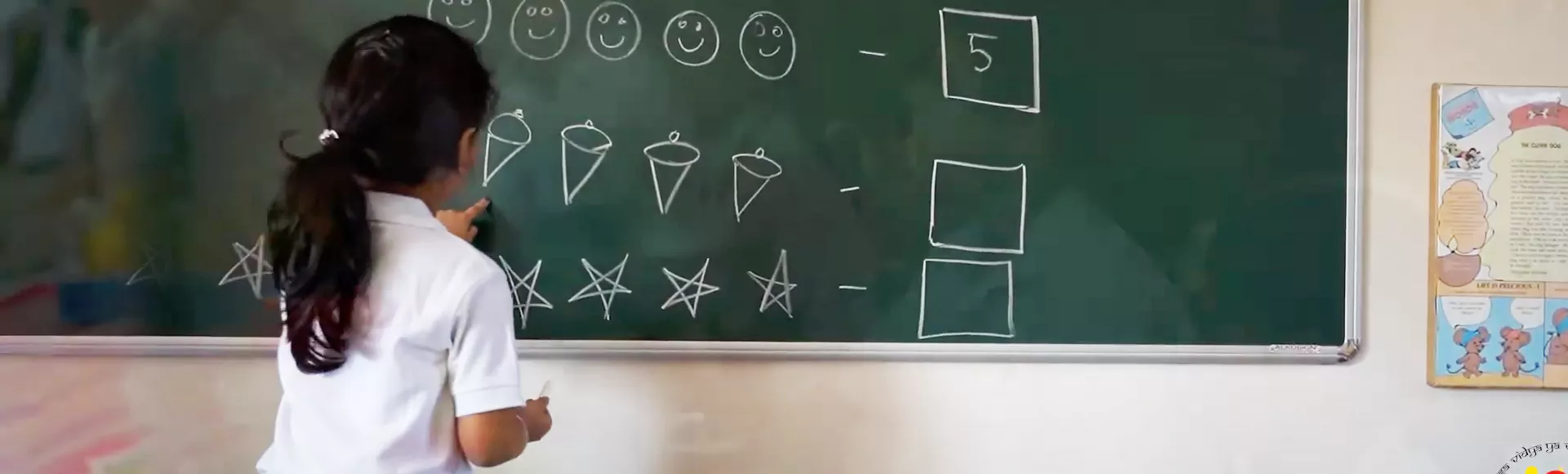
with NEP 2020, primary teaching is expected to be activity-based, not
just lecture-based. This includes hands-on tasks, group work, simple
experiments, role-plays, and projects.
At Vidyanjali,
activity-based learning is central. The school aims to “make learning
enjoyable through Montessori and Activity-Based Education”, encouraging
children to work with materials, think independently, and build communication
and resilience.
Montessori And Experiential Methods
Vidyanjali
offers Montessori education in the early years and into the lower grades
alongside CBSE. Teaching strongly uses:
●
Storytelling and role-play for
language and values
●
Visuals, charts, and
manipulatives for abstract ideas
●
Carefully guided interactive
tools and technology to support, not replace, real learning
What Is Included In The Class 1 To Class 5 Syllabus?
The Class
1–5 syllabus is designed to build year on year:
●
Class 1–2: early reading and writing, number sense, basic operations, and
themes like family, school, and the local environment.
●
Class 3–5: paragraph reading and writing, grammar, multiplication and
division, fractions, maps, states and countries, and basic science topics with
simple experiments.
Vidyanjali follows the CBSE curriculum from Class I onwards, aligned
with the latest Board guidelines and NEP 2020 competencies.
How Does Nep 2020 Impact The Primary School Curriculum?
NEP 2020
impacts primary education in several concrete ways:
●
5+3+3+4 structure: Classes 1–2 fall in the Foundational Stage; Classes 3–5 in the
Preparatory Stage. The curriculum and teaching methods must reflect age-wise
development rather than a one-size-fits-all pattern.
●
Foundational Literacy and
Numeracy (FLN Mission): Universal FLN by Grade 3 is
the top priority, with clear learning outcomes and large national initiatives
like NIPUN Bharat.
●
More holistic assessment: more weight on formative assessment, project-based work, and
conceptual understanding, less on rote learning and high-stakes tests alone.
How To Choose The Best Primary School For Your Child?
When
you’re choosing a primary school, it helps to move beyond glossy brochures and
focus on a few core questions that really affect your child’s day-to-day life.
1. Curriculum And Board
Start by
checking which board the school follows, CBSE, ICSE, or a State Board,
and how that fits your child’s future. If you may move cities or states, a
nationally recognised board like CBSE can make transitions easier. Look at how
clearly the school explains its curriculum on the website or in the prospectus:
do they talk only about “syllabus completion,” or do they mention concepts,
skills, and learning outcomes?
2. Teaching Methods And Classroom Experience
The
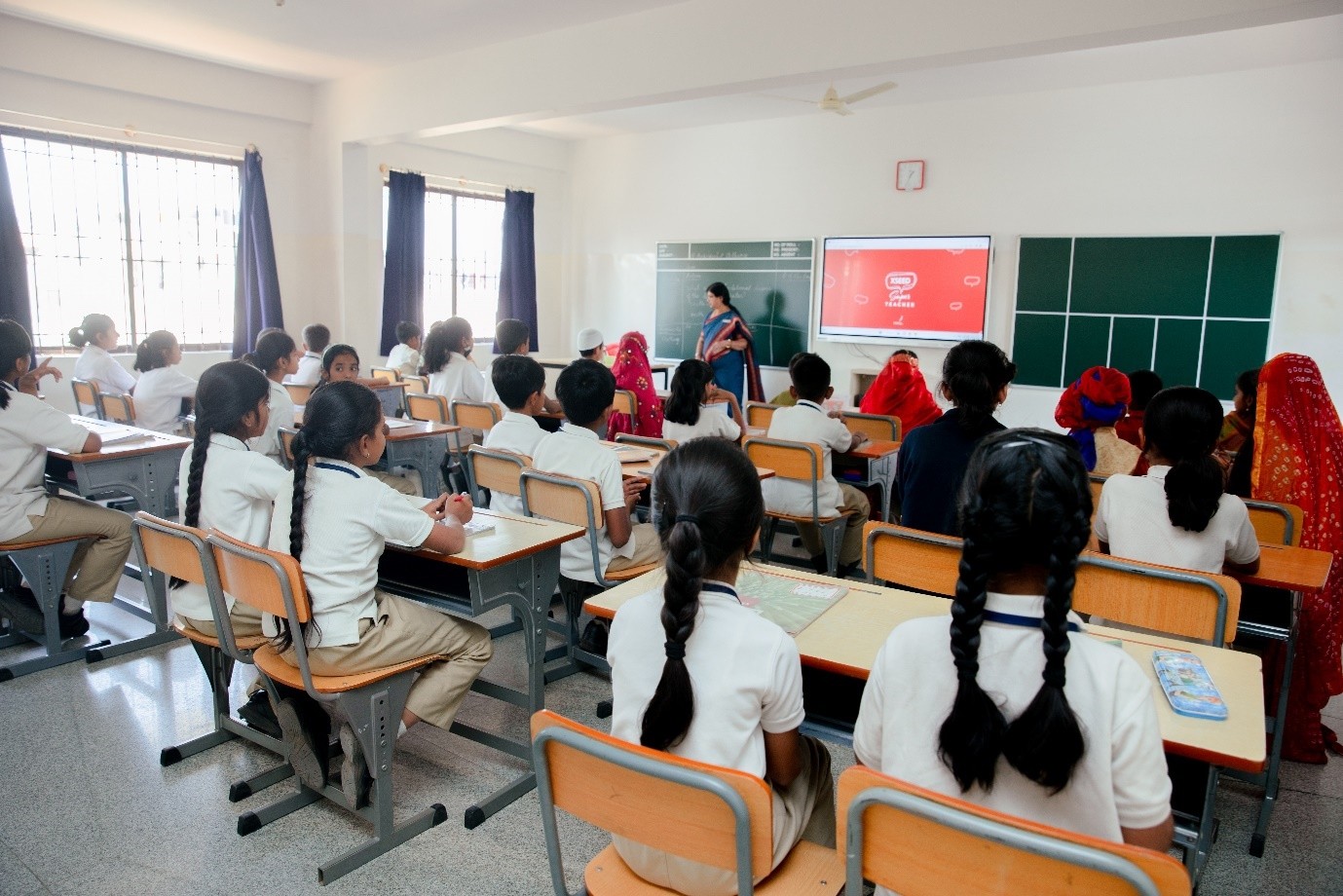
curriculum matters, but how it is taught matters even more. During
school visits or interactions, try to understand whether classes are activity-based
and child-friendly, or mostly lecture and rote learning. Ask how teachers
handle mixed abilities in a class, how often they use discussions, hands-on
tasks, and projects, and what the student–teacher ratio looks like. A
smaller ratio usually means more individual attention and better emotional
support.
3. Infrastructure And Safety
A good
primary school doesn’t need to be flashy, but it should be safe, clean, and
functional. Look at the classrooms, library, labs, and playground, and ask
yourself: would my child feel comfortable here? Check for basic safety measures
such as CCTV in key areas, medical support, clear entry–exit control, and
reliable transport if you need it. These details tell you how seriously the
school takes children’s well-being.
4. Life Skills, Arts, And Sports
Primary
school is where children discover what they enjoy and what they’re good at.
Make sure art, music, and sports are part of the regular timetable, not
just something they show on annual day. Ask how often children get time on the
ground, how co-curricular periods are used, and whether there are events,
assemblies, exhibitions, or clubs where students can present their work and
build confidence.
5. School Culture And Communication With Parents
Finally,
pay attention to the culture of the school. How do they talk about
discipline, through fear and punishment, or through clear rules and guidance?
How do they handle inclusion, differences in learning pace, or behavioural
issues? Also, check how the school communicates with parents: are there
regular updates, PTMs, and clear channels to reach teachers or coordinators
when needed?
Once you
look at these few areas in a focused way, it becomes much easier to see which
school truly supports your child’s all-around growth, and which one only looks
impressive on paper.
Why Is Vidyanjali Academy Considered One Of The Best Primary Schools?
Vidyanjali
Academy for Learning in RT Nagar, Bengaluru, has spent over three decades
building a reputation as a school that blends Montessori principles with CBSE
rigour in a warm, child-centred environment.
1. Strong Academic Foundation (Montessori + CBSE)
Vidyanjali
offers Montessori education in the early years and a CBSE curriculum from Class
I onwards, giving children a gentle, hands-on start and a nationally recognised
academic pathway with clear progression in languages, maths, science, and
social studies.
2. Experiential And Value-Based Education
The
school is known for “Montessori and Activity-Based Education,” making learning
enjoyable and meaningful. Children are guided to build core life skills such as
communication, collaboration, leadership, and emotional intelligence, alongside
academic achievement.
3. Technology Integration And Innovation
With a
dedicated computer lab and STEM labs that support coding and robotics, regular
robotics/Creya and science exhibitions, Vidyanjali gives students early,
practical exposure to coding, problem-solving, and technology use in real-world
contexts.
4. Rich Co-Curriculars And Life Skills
Dance,
music, arts, sports, and structured initiatives like Silent Reading ensure that
children grow in creativity, confidence, and physical well-being, not just in
textbook knowledge.
5. Safe, Supportive, Child-Friendly Campus
Set on a lush green campus with its own grounds, Vidyanjali offers a safe, closely monitored environment with facilities like transport, CCTV, and medical support, helping young learners feel secure, supported, and ready to expl