


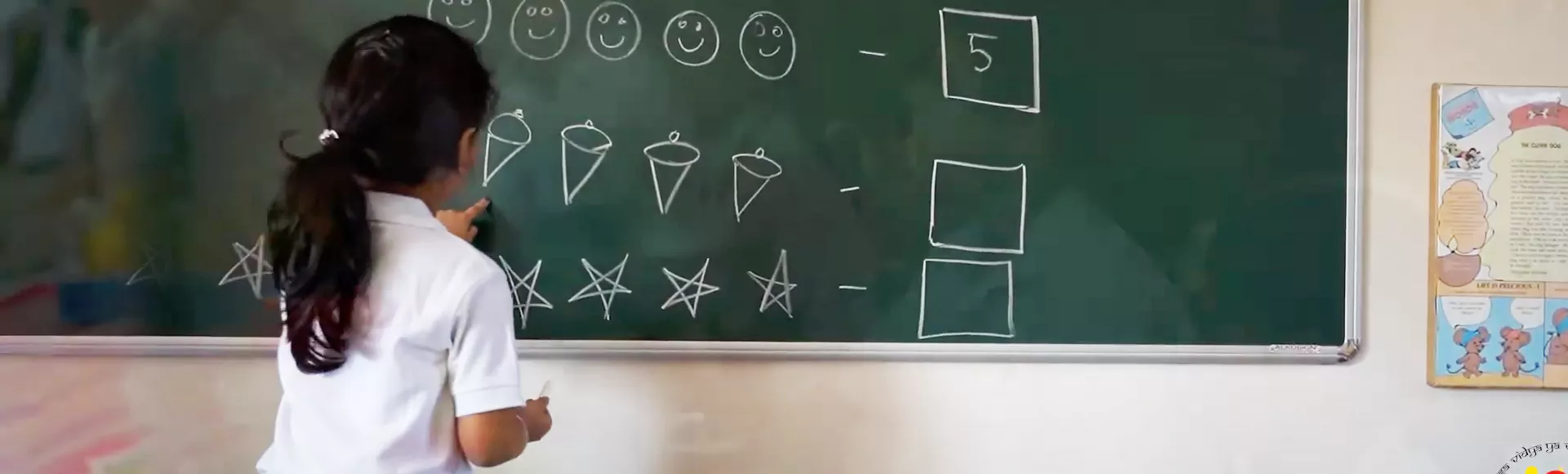
One of the most distinctive features of Montessori education is its emphasis on practical life skills. These everyday activities, dressing, dusting, sweeping, and washing, may seem simple, but in a Montessori classroom, they hold profound significance.
Dr. Maria
Montessori believed that children learn best by doing. Through purposeful,
hands-on experiences, they develop independence, coordination, and confidence.
Practical life activities bridge the gap between learning and living, helping
children prepare for both academic success and life itself. Let’s explore how
practical life skills shape Montessori education and why they are central to
early childhood education at Vidyanjali.
What Are Practical Life Skills in Montessori?
Exercises
of Practical life (EPL) skills refer to the real-life tasks and activities that
help children develop independence, coordination, concentration, and
responsibility. In the Montessori context, these are purposeful, hands-on
daily-life activities that build independence, concentration, and control of
movement, such as dressing, cleaning, and caring for the environment. While
working with the materials of EPL, children develop will power to take up the
work and complete it the way it is presented to them. To do so, they need to sit with the material
and concentrate and complete the work. Once, they master the activities and
will be independent in managing themselves. For example, carrying, put back,
put down things etc will be part of their life in a graceful manner. They develop fine motor skills.
Dr
Montessori designed these activities not just to teach children what to do, but
to help them understand how to do it with care, precision, and pride. Through
repetition, children refine both their motor skills and sense of order, forming
the foundation for all future learning.
Why Are Practical Life Skills Important in Montessori Education?
From the
moment a child enters a Montessori classroom, in general, universally, they are
encouraged to “help me do it myself.” Completing real-world tasks, fosters autonomy
and self-belief. When a child learns to tie their shoelaces or serve their
snack, they gain a sense of accomplishment that builds lasting confidence.
Developing Concentration and Coordination
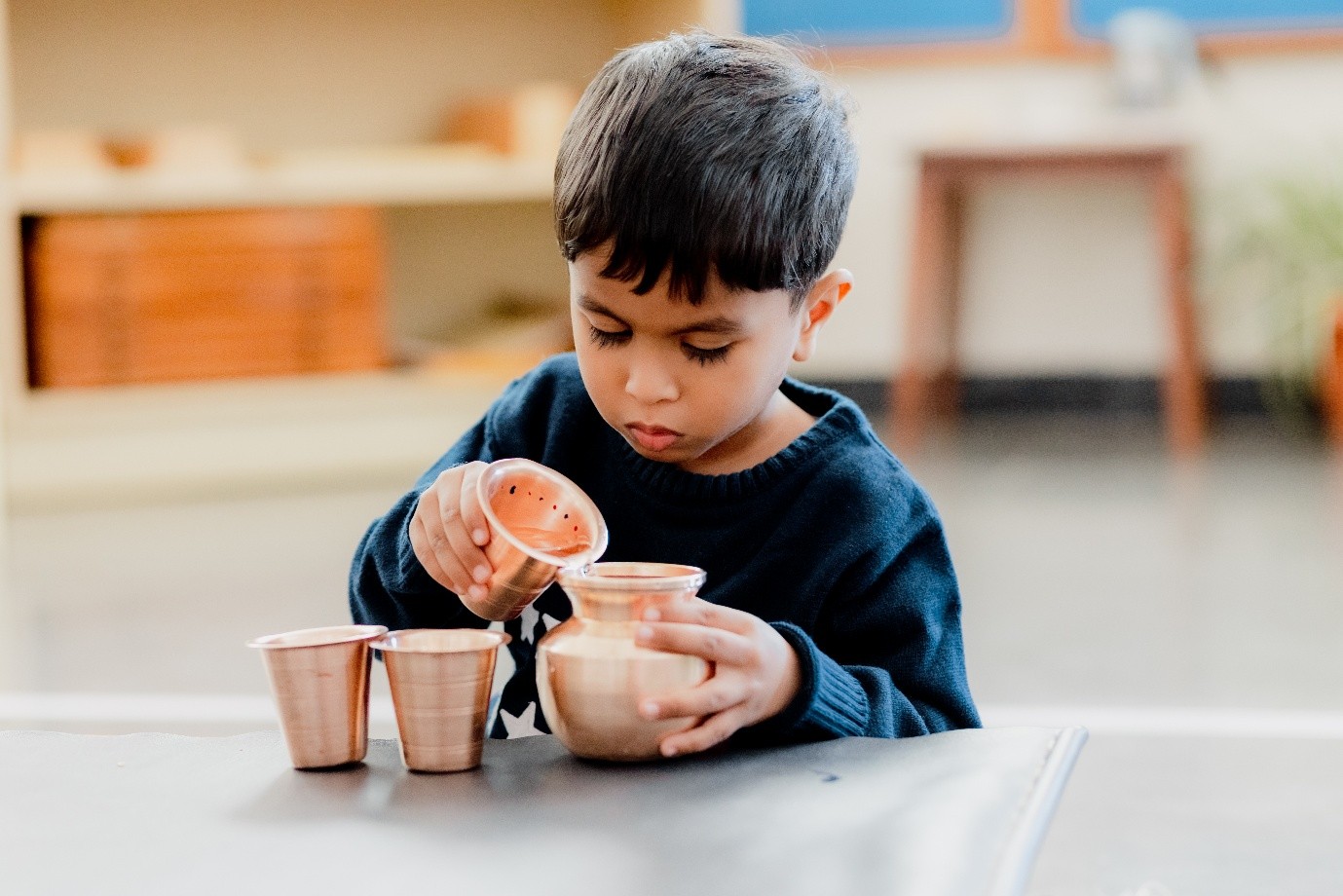
Practical
life exercises require focus and precision. Pouring water from one jug to other
two cups, without spilling, teaches both hand & eye coordination and
concentration. Over time, these skills extend into all areas of learning,
including writing and problem-solving. Meaning, while working with the
material, indirectly the children gain patience, sitting tolerance to complete
the taken work/tasks, which are base for the future learning in their higher
classes.
Establishing Order and Routine
Order is
central to Montessori philosophy. Practical life activities, like arranging
materials on a tray or returning items to their place, teach children to
respect structure and predictability. This sense of order supports calmness,
discipline, and a readiness for academic learning. It will become part of their daily routine.
Encouraging Responsibility from a Young Age
When
children care for themselves and their environment, they learn responsibility
and respect. Montessori educators observe that children who water plants, wipe
spills, and care for their classroom develop a deep sense of belonging and
community.
What Are the Main Areas of the Practical Life Curriculum in Montessori?
Children practice
skills such as dressing, buttoning, tying, washing hands, and preparing snacks.
These activities foster personal hygiene, independence, and fine motor
development.
Care of the Environment
Tasks
like dusting shelves, cleaning tables, and watering plants instill respect for
shared spaces. They also teach environmental awareness and stewardship from an
early age.
Grace and Courtesy
Children
learn social etiquette through structured interactions, greeting peers by
saying “namasthe”, saying “please” and “thank you,” or waiting patiently. These
lessons nurture empathy and kindness, essential for social harmony.
Control of Movement
Activities
such as spooning beans, pouring liquids, and walking on a line refine both
gross and fine motor coordination. Children learn to move deliberately,
developing body control and mindfulness.
What Are Some Examples of Practical Life Activities in a Montessori Classroom?
Montessori
classrooms are miniature versions of the real world, with child-sized tools and
responsibilities. Activities include polishing shoes, folding napkins, washing
dishes, or setting the snacks table.
Tools and Materials Used
Children
use real, scaled-down tools made of wood, glass, and metal. These authentic
materials encourage care and attentiveness, unlike plastic, which can’t be
broken, real materials teach natural consequences and precision.
Age-appropriate Variations
●
Toddlers (1.5–3 years): Simple pouring,
carrying objects, washing hands.
●
Preschoolers (3–5 years): Dressing
frames, flower arrangement, cleaning up spills.
●
Kindergarten (5–6 years): Advanced tasks
like preparing food, caring for pets, or organising shelves.
Each task
evolves with the child’s growing skills and independence.
How Do Practical Life Skills Help in Child Development?
Every
action, pouring, spooning, folding, strengthens muscles and coordination. Fine
motor skills developed in these activities directly support handwriting and
self-care abilities later on.
Emotional and Social Growth
When
children care for their environment or help others, they experience a sense of
belonging and purpose. Sharing materials and taking turns during activities
cultivate patience, empathy, and social grace.
Cognitive and Executive Functioning Skills
Practical
life tasks engage planning, sequencing, and memory. Activities like preparing a
snack require multiple steps, fostering problem-solving and executive
functioning, skills crucial for academic success.
How Are Practical Life Activities Presented to Children?
Montessori
teachers or “guides,” model each activity slowly and gracefully. They
demonstrate without excessive verbal instruction, allowing children to absorb
through observation.
Demonstration, Observation, and Repetition
Children
first watch the teacher perform an activity, then try it independently.
Repetition is encouraged, not for perfection, but for mastery. Over time,
repetition transforms skill into confidence and focus.
Importance of Freedom Within Limits
While
freedom is central in Montessori classrooms, it exists within a prepared,
orderly environment. Children choose activities only which are presented to
them and interest them but are guided to complete them responsibly, respecting
materials and peers.
How Do Practical Life Activities Reinforce Montessori Principles?
Montessori
philosophy views the child as capable and worthy of trust. Practical life
activities affirm this belief by offering real responsibilities and meaningful
work.
Learning Through Doing
Children
learn best through hands-on experiences. Every practical life activity embodies
the principle of learning by doing, connecting physical action to intellectual
growth.
Prepared Environment and Self-directed Activity
The
classroom is designed for independence, with accessible shelves, real tools,
and beautiful order. This environment invites exploration and self-direction,
allowing children to choose, complete, and tidy up activities independently.
How Can Parents Encourage Practical Life Skills at Home?
Invite
your child to participate in daily chores, folding laundry, setting the table,
watering plants, or feeding pets. These tasks strengthen self-esteem and
connection.
Setting Up a Montessori-inspired Space at Home
Create
child-friendly spaces with accessible shelves, real tools, and defined work
areas. For example, a low kitchen shelf with child-sized utensils allows
children to serve themselves safely.
Tips for Consistency and Patience
● Allow extra time for your child to complete tasks.
●
Resist the urge to “fix” their
work, it’s the process, not perfection, that matters.
●
Model calmness, respect, and
gratitude for effort.
How Is Progress Measured in the Practical Life Curriculum?
Montessori
teachers rely on careful observation rather than standardized tests. They note how children engage,
focus, and refine movements over time.
Signs of Mastery
·
Independence: Completing tasks without assistance.
·
Repetition: choosing activities
voluntarily and frequently.
·
Confidence: showing pride and
calm during work.
These
subtle signs signal developmental readiness for more complex work.
Practical Life Skills with the Montessori Curriculum
Practical
life skills are at the heart of Montessori education because they nurture the
whole child, mind, body, and spirit. Through simple, purposeful tasks, children
learn independence, respect, and discipline. These activities are not just
“chores” but meaningful opportunities for growth and joy. They lay the
groundwork for academic learning, emotional resilience, and lifelong curiosity.
In the Montessori classroom, every polished shoe, every wiped table, and every carefully poured jug is a step toward self-mastery and fulfillment.
How Do Practical Life Activities Promote Fine Motor Skills?
Practical
life exercises strengthen small muscle control, especially in the hands and
fingers. Tasks like spooning masoor dal, green grams, threading beads or using
tongs refine dexterity, preparing children for writing and art.
Why Is Order Important in Practical Life Activities?
Order
helps children make sense of the world. When materials are arranged neatly and
used purposefully, children internalize organization, patience and focus,
skills vital for future academic learning.
At What Age Do Children Start Practical Life Work in Montessori?
Practical
life learning begins as early as 18
months, when toddlers start imitating adults. Montessori environments adapt
activities to match developmental stages, ensuring success and engagement.
How Do Montessori Life Skills Impact a Child’s Behaviour?
Children
who engage in practical life activities display calmness, self-control, and
confidence. The sense of purpose and routine reduces frustration and fosters
positive behaviour.
Can Practical Life Activities Be Done at Home?
Absolutely!
Home offers countless opportunities, sweeping, moping, cleaning utensils, watering
plants, preparing snacks, organising toys, or setting the snacks table. When
parents model these tasks with patience, children naturally follow.
How Do Practical Life Activities Prepare Children for Academic Work?
Practical
life work develops concentration, order, and fine motor control, all
prerequisites for reading, writing, and mathematics. A child who pours water
with precision is also training their hand for handwriting and their mind for
problem-solving.