

At
Vidyanjali Academy, we do things differently. While most schools follow a fixed
pattern, we follow the Montessori method, a child-led approach that respects
your child’s pace, curiosity, and growth. Discipline here isn’t about strict
rules. Children learn to manage themselves through freedom, respect, and guided
choices. We don’t treat discipline as something we impose. We help children
build it from within.
Every
child matters. No matter their background, each student is seen, supported, and
made to feel safe. We focus equally on academics and emotional development.
That means your child learns not just math and language, but also how to be
kind, confident, and resilient. Children are encouraged to speak up, take
charge, and work with others, not just follow instructions.
We’ll
explain what the Montessori philosophy is and how we bring it to life at
Vidyanjali Academy, through self-discipline, inclusion, emotional safety, and
active student involvement.
What Is Montessori Education?
The
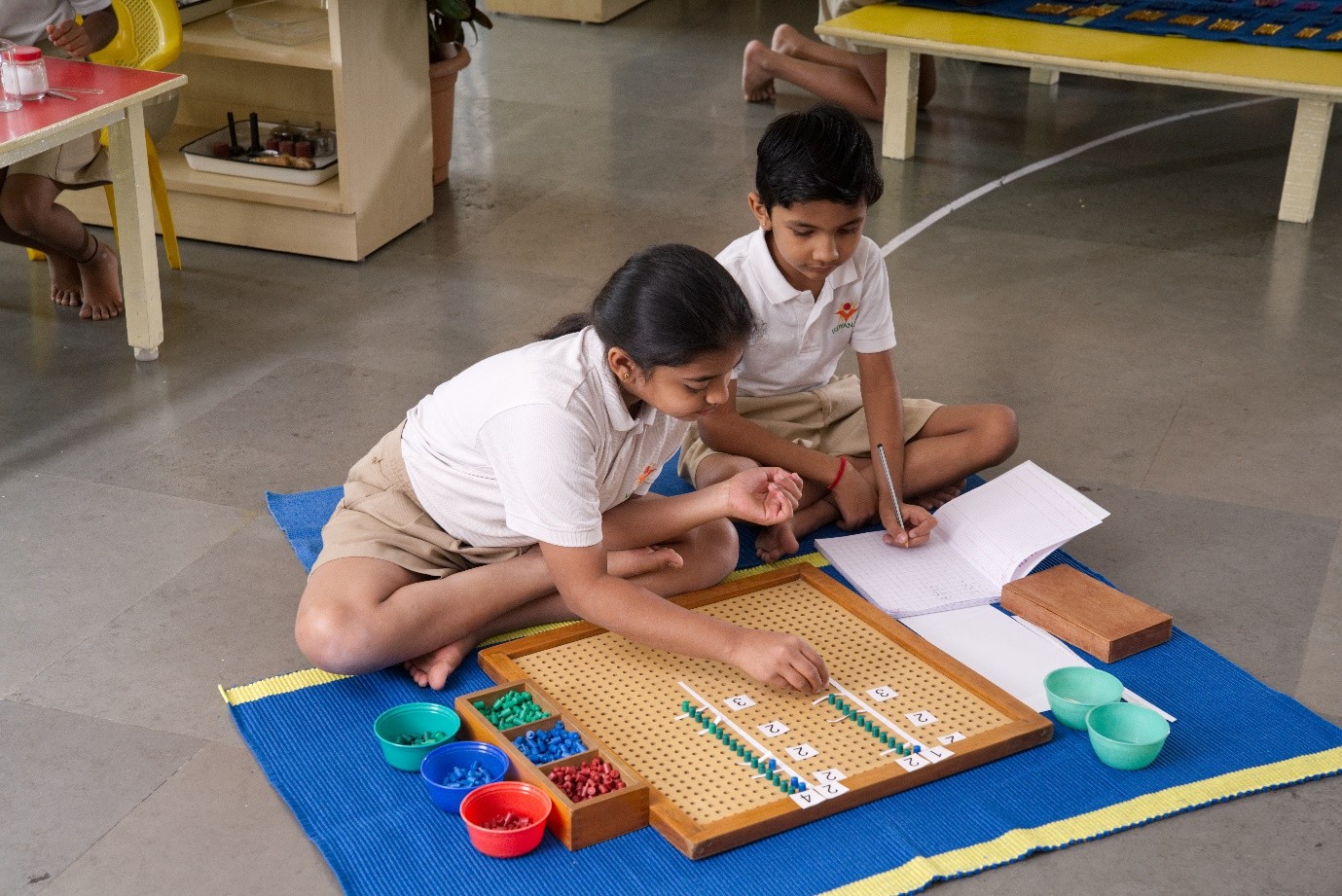
Montessori method helps children learn by doing. It gives them freedom to
choose their activities, work at their own pace, and learn in classrooms with
kids of different ages. A teacher guides them, but doesn’t control every step.
The Montessori method has become one of the most trusted ways to support a
child’s growth, both in and out of the classroom. Here’s a quick look at why it
works:
●
It builds independence: Kids make
choices, solve problems, and finish tasks on their own. This helps them feel
confident and focused from an early age.
●
It matches how kids grow: Lessons are
designed to fit the way children develop. So learning feels smooth and makes
sense, instead of being pushed too fast.
●
It teaches responsibility: Students plan
their work, manage their time, and take care of their tools. These habits help
them in school and in life.
●
It supports self-control: Children learn
to deal with frustration, wait their turn, and stick with hard tasks. They
practice patience without being forced.
●
It keeps kids curious: Instead of just
memorizing answers, they learn how to think, ask questions, and stay interested
in learning over time.
Dr. Maria
Montessori, the first female doctor in Italy, created this method. She started
by working with children with disabilities. She noticed that they did well when
they had structure, choices, and respect. Her work shaped a new way of
teaching, one that sees every child as smart, capable, and different in their
own way.
What Are the Core Ideas Behind Montessori?
Before
you pick a school, it helps to know how
your child will be taught, not just what
they’ll learn. At Vidyanjali Academy, teaching is guided by the core ideas of
the Montessori method. These ideas shape how your child explores, learns, and
grows.
1.
Respect for the Child
At
Vidyanjali, your child is treated as a capable person with their own thoughts.
Teachers don’t push lessons on them. Instead, they observe and guide. Your
child leads their own learning, which builds confidence and responsibility.
2.
The Absorbent Mind
Young
children learn a lot just by being around things. Vidyanjali supports this with
hands-on materials and real-life tasks. These activities help your child learn
language, movement, math, and culture, without pressure.
3.
Sensitive Periods
Children
go through short phases when learning certain skills becomes easier. The
teachers at Vidyanjali watch for these moments. When they see them, they bring
out the right tools to support that learning at the right time.
4.
The Prepared Environment
Everything
in the classroom has a purpose. From the small chairs to the way materials are
placed, nothing is random. The space stays clean and calm so your child can
focus, work on their own, and take pride in using things properly.
5.
Learning by Doing
Your
child doesn’t just listen, they do.
After a short demo, they explore the material on their own. They repeat it if
they want, and go at their own pace. This hands-on style helps them stay
curious and involved.
6.
Freedom Within Limits
Kids at
Vidyanjali have real freedom. They choose their own work and move around when
needed. But they also follow simple rules that keep the classroom respectful.
This mix of freedom and structure helps your child become more independent
without things getting out of control.
How Does Montessori Philosophy Influence the Classroom?
At
Vidyanjali Academy, the Montessori philosophy isn’t an add-on, but built into
the layout, the materials, and even how children interact with one another.
Every aspect of the environment is designed to support not just what children
learn, but how they grow, mentally, emotionally, and socially.
1.
Thoughtful Classroom Design
Classrooms
are organized into distinct learning stations with quiet zones that promote
focus and calm. Children are free to move, explore, and choose activities, all
within a structured setting that supports both independence and concentration.
2.
Real Tools and Child-Sized
Furniture
Everything,
from the tables to the tools, is designed for the child’s scale. This practical
detail gives children physical confidence and a sense of ownership, as they
work with real materials that mirror the adult world.
3.
Emphasis on Order, Beauty, and
Accessibility
Every
shelf, tray, and work material is placed with intention. The room is orderly,
visually calming, and easy for children to navigate independently, encouraging
self-discipline, attention to detail, and care for the environment.
4.
Mixed-Age Groups and Peer Learning
Children
from different age groups share the same space, allowing younger ones to learn
by observation and older ones to lead through example. This dynamic promotes
collaboration, empathy, and deeper understanding.
5.
Teacher as Observer and Guide
Rather
than directing every activity, the teacher observes, listens, and offers
support only when needed. This approach gives children room to explore, while
ensuring they stay engaged and on track with their development.
6.
Cognitive, Emotional, and Social
Growth
Children
develop far beyond academics. Daily routines foster emotional resilience,
social awareness, and cognitive skills through hands-on learning and consistent
peer interaction.
7.
Executive Functioning in Action
Planning
a task, recalling steps, adapting to changes, these are skills built naturally
through Montessori work. Activities are structured to strengthen working
memory, mental flexibility, and self-control.
8.
Self-Regulation and
Problem-Solving
With
freedom comes responsibility. Children learn to wait their turn, handle
setbacks, and resolve conflicts with minimal adult intervention, developing
strong internal regulation and practical problem-solving skills.
9.
Supporting Early Brain Development
The
environment is aligned with how young brains grow best, through meaningful
repetition, hands-on work, and just the right level of challenge. This supports
optimal brain plasticity during key developmental years.
What Are the Differences Between Montessori and Traditional Education?
Montessori
education feels different from the start, and there’s a reason for that. Its
methods are shaped by a clear philosophy and supported by research. Let’s look
at what sets it apart and what studies have found.
1.
Learning Style: Students Take the
Lead
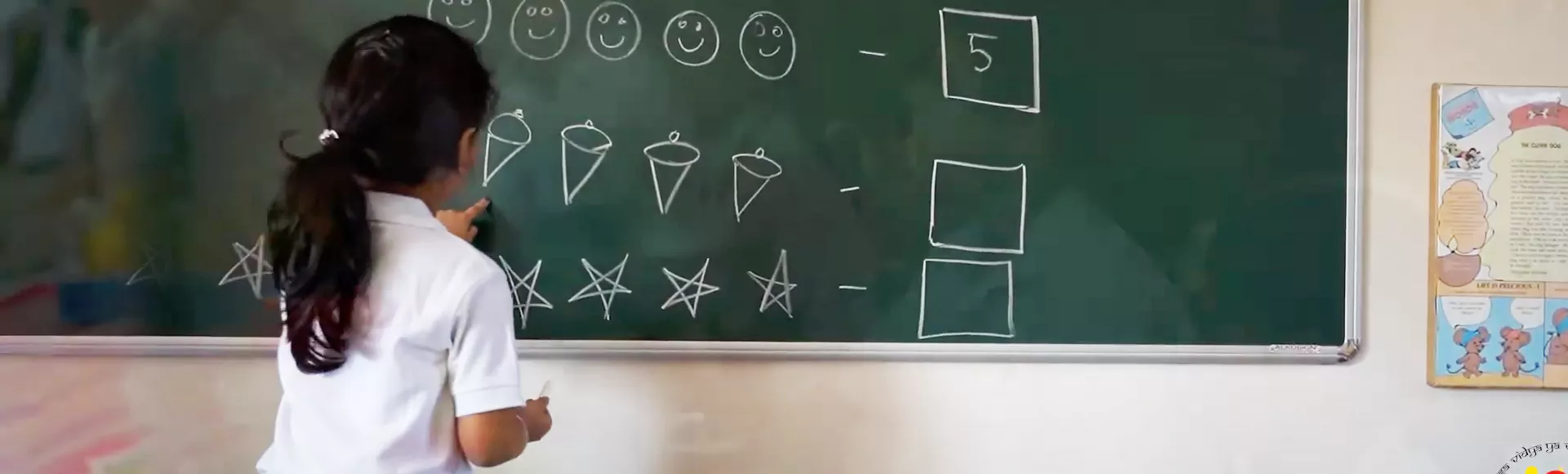
In a
Montessori classroom, children choose what they want to work on. Teachers don’t
give direct instructions. Instead, they guide students and help them learn how
to make decisions and work independently.
2.
Evaluation: Teachers Observe, Not
Test
There are
no report cards or standard tests here. Teachers track progress by watching
students and noting how they work. This gives a fuller picture of each child’s
growth, not just how they score on paper.
3.
Curriculum: Everything Connects
Subjects
are not taught in separate blocks. Kids learn math, science, reading, and art
together. This helps them see how different ideas fit together in real life.
4.
Pacing: Every Child Sets Their Own
Speed
Kids
don’t have to follow one fixed path. One child might spend more time on
numbers, while another gets into nature. Both are supported. No one is rushed
or made to wait.
5.
Classroom Design: Built for Kids
to Move and Explore
You won’t
see rows of desks. Instead, you’ll find cozy spaces, group tables, and hands-on
learning tools. Everything is set up so children can focus, move around, and
work together.
Studies
by experts at K12 Dive have found that Montessori students
often do better than others, both in schoolwork and social skills. Research
also links the method to stronger focus, better thinking skills, and even
long-term brain development.
What Should You Know Before Choosing Montessori?
Montessori
is a mindset that shapes how children approach the world for life. But before
choosing a Montessori school, it’s important to understand how the approach
works, who it’s best suited for, and what long-term impact it can have on your
child.
Accreditation & Teacher Training
Look for
Montessori schools with trained educators and credible affiliations.
Accreditation from bodies like IMC, IMTC, AMI or AMS ensures the school follows
authentic Montessori practices. At Vidyanjali Academy, trained Montessori
guides lead every classroom, ensuring consistency, intention, and
child-centered learning.
Fit for Different Personality Types
Montessori
works especially well for self-motivated learners, quiet observers, and even
active doers, thanks to its hands-on, self-paced structure. At Vidyanjali,
mixed-age classrooms allow all personalities to find their rhythm without
pressure or comparison.
Financial and Accessibility Considerations
Montessori
can vary in cost depending on location and level. Vidyanjali Academy aims to
make quality Montessori education more accessible without compromising on
materials, teacher training, or safety.
Transitioning In and Out of Montessori
Children
transitioning into Montessori often adjust easily due to the inviting,
child-led setup. And when they transition out, whether to traditional schools
or higher levels, they carry with them a foundation of independence,
adaptability, and strong self-management.
Montessori
doesn’t teach children what to think,
it teaches them how to think. Through
exploration and choice, kids develop curiosity, decision-making skills, and
lasting confidence. It’s not just about grades, it’s about becoming a
self-driven learner for life.
What Else Should You Know About Montessori Education?
1. What type of child is Montessori best for?
Any type of Children can thrive in Montessori
settings.
2. Is Montessori education religious or secular?
Montessori is completely secular and focuses on
universal values, not religious teachings.
3. Do Montessori schools assign homework?
No
5. What if there’s no higher-level Montessori program
to transition into?
Montessori children adapt well to other systems
thanks to their strong self-learning skills.
6. What does transition from Montessori to traditional
school look like?
Smooth, Montessori builds the focus, confidence,
and adaptability needed for any classroom. Can visit the school to know in
detail.