


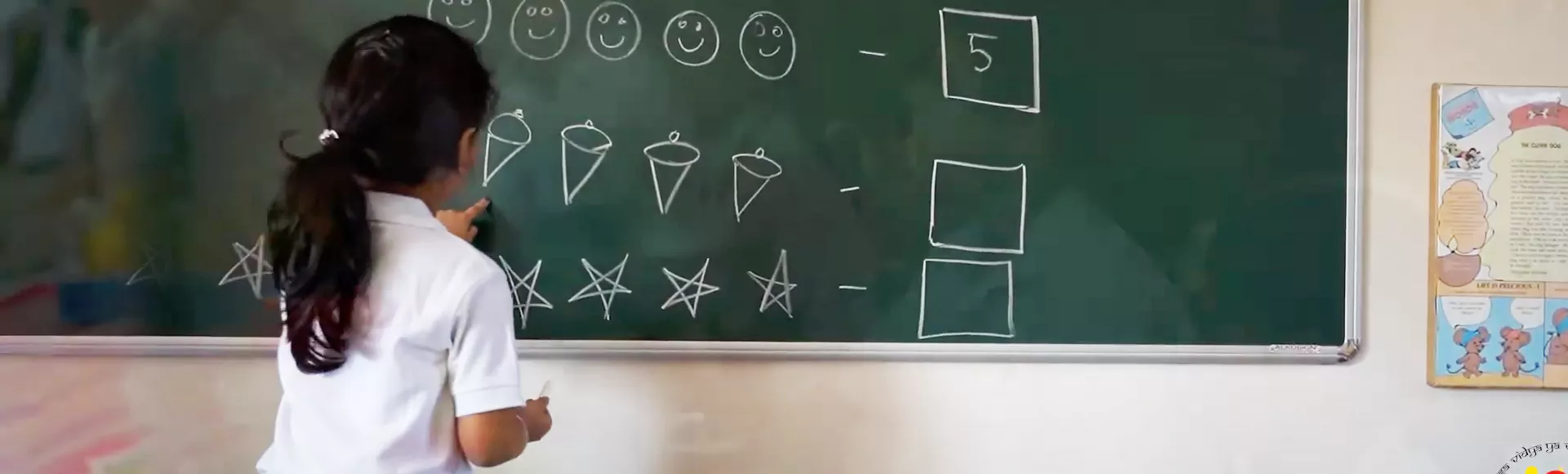
At Vidyanjali
Academy, we follow the Montessori method with mixed-age classrooms at its core.
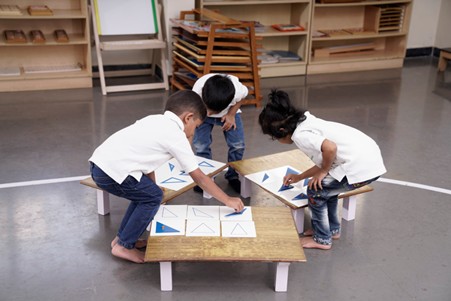
Children between ages 3 to 5–6 or 6 to 9 learn together in the same space. This
setup mirrors real-life settings and encourages students to learn from each
other.
Younger
children watch and follow older ones. At the same time, older children get
better at what they’ve learned by helping the younger ones. It creates a
classroom where everyone supports one another. Each child learns at their own
pace. We use Montessori materials that let students move forward when they’re
ready. No one is forced to keep up or slow down.
You’ll find
that this way of learning builds real confidence. It also helps children work
better together and stay curious. We’ll walk through how this model helps your
child grow as a leader, build stronger learning habits, and develop key social
and emotional skills.
What is a Mixed-Age Classroom?
One thing that
makes Montessori education different is the mixed-age classroom. Instead of
putting children into narrow age groups or grades, Montessori combines kids
across a 3-year age span. This isn’t just a different setup. It changes how
learning happens.
What Is a Mixed-Age Classroom?
In Montessori,
a mixed-age classroom includes children from a 3-year age range. This matches
how children actually develop, socially, emotionally, and mentally. It doesn’t
force them into boxes based on birth dates.
Here’s how the
age groups are usually set up:
●
0–3
years: Infant & Toddler Community
●
3–6
years: Primary / Casa / Children’s House
●
6–9
years: Lower Elementary
●
9–12
years: Upper Elementary
●
12–15
years: Adolescent Programs
Why Montessori Uses Mixed-Age Groups
In Montessori
classrooms, younger children learn by watching older peers. Older children
reinforce their knowledge by helping others. This natural exchange builds
focus, confidence, and social skills on both sides. Mixed-age groups also
support emotional growth. Kids develop leadership, empathy, and patience, not
through lectures, but by working together every day.
Dr. Montessori
designed these groupings around stages of development, not strict age. This
approach aligns with how children actually grow, mentally and emotionally.
Teachers, known
as guides, observe and step in when needed. They offer lessons at the right
time, based on each child’s readiness. Materials vary in difficulty, so kids
move ahead at their own pace. Peer learning is built into daily life. Children
help each other, work together, and learn as a community. Everyone follows an
individual plan, but no one learns alone.
What Are the Benefits of Mixed-Age Classrooms?
At Vidyanjali
Academy, mixed-age classrooms aren’t just a practical setup. They’re an
intentional choice based on years of experience. These classrooms help children
grow through real-world social interaction, self-direction, and a strong sense
of community.
1. Social and Emotional Growth Happens Naturally
When kids of
different ages learn together, they pick up important life skills just by being
around each other. Younger children watch how older peers solve problems,
manage tasks, and communicate. This helps them learn how to handle emotions and
talk clearly.
At the same
time, older children get better at what they’ve already learned by helping
others. This builds patience, empathy, and a quiet sense of leadership.
2. Confidence and Responsibility Build Over Time
In mixed-age
classrooms, older students often step up. They help classmates, guide routines,
and lead group work. No one assigns them these roles. They take them on
naturally, which builds confidence in a real and lasting way.
Younger kids
benefit too. They’re not rushed to keep up. They get time to explore and learn
in their own way. Over time, they start to trust their own efforts instead of
comparing themselves to others.
3. Each Child Gets the Time They Need to Learn
Montessori
classrooms give children long, quiet blocks of time to focus. This helps them
stay with a task until they’re ready to move on. There’s no rush, and no one is
forced to learn something just because of their age.
Instead, each
child follows their own pace. That lowers stress and makes learning feel
better, not like a race, but like something they’re in control of. Kids stay in
the same classroom for several years, which gives them time to build strong
bonds, with their classmates, their teacher, and the work they’re doing.
What Are the Challenges of Mixed-Age Classrooms?
Mixed-age classrooms are a key part of Montessori
education. They encourage peer learning, build leadership skills, and
support social growth. But as a parent, it’s natural to have questions,
especially about how well the model works for kids at different levels. Let’s
talk about the benefits, the real challenges, and how trained teachers handle
them every day.
One of the
biggest concerns is the age difference. You might wonder if your younger child
will struggle to keep up. Or if your older child won’t feel challenged enough.
Another common worry is whether everyone in the class can make steady academic
progress when they’re all learning at their own pace.
How Montessori Classrooms Stay Balanced
Montessori
teachers train specifically to manage multi-age settings. They don’t follow a
one-size-fits-all approach. Instead, they observe each child closely, keep
detailed notes, and adapt the lessons based on what each student needs. They
don’t lecture. They guide when needed and step back when a child is working on
their own.
Another reason
this model works is because of how the classroom runs. Children get to choose
their work within a set structure. Older students often help younger ones,
which strengthens their own understanding too. Meanwhile, younger kids learn by
watching and interacting with older peers.
Teachers don’t
try to split their attention equally. They respond based on where each child is
developmentally. Throughout the day, they move around, check in, and offer
support, so even quiet, independent kids aren’t left out.
Mixed-Age Classrooms vs Traditional Single-Age Classrooms
One of
the most distinct features of Montessori education is its use of mixed-age
classrooms, usually spanning 2 to 3 years in one group. This approach differs
sharply from the traditional model, where children are grouped strictly by age.
But is one better than the other? Here’s how they compare, and what it means
for your child.
|
Feature |
Montessori (Mixed-Age) |
Traditional (Single-Age) |
|
Classroom Structure |
2.5–3 year age span |
Same-age peers only |
|
Pace of Learning |
Individualized |
Uniform and grade-based |
|
Peer Interaction |
Older children mentor, younger ones learn by imitation |
Limited leadership or modeling roles |
|
Teacher's Role |
Guide and observer |
Instructor and evaluator |
|
Assessment Style |
Observation-based, portfolio-driven |
Tests, grades, fixed benchmarks |
|
Curriculum Flow |
Child-led, hands-on |
Textbook-driven, teacher-paced |
Long-Term Impact: What the Research Shows
Studies
and long-term case observations suggest that students in Montessori classrooms
often display stronger executive function, problem-solving skills, and social
adaptability compared to peers in traditional schools. These children learn
early how to manage time, resolve conflicts, and collaborate across age groups,
skills that translate well into both higher education and adult life.
Recent
research continues to support the benefits of Montessori education. A 2023
review found by the Campbell Collaboration that Montessori
students perform ahead of their peers in math and reading and show stronger
self-regulation and executive function. Studies also highlight greater
attention spans, intrinsic motivation, and emotional well-being, particularly
in early childhood settings.
Is a Mixed-Age Classroom Right for Your Child?
Children
who are independent, curious, or thrive when learning from peers often do
especially well in mixed-age settings. So do those who need a bit more time to
master skills without the pressure of constant comparisons.
However,
some children may initially struggle with the openness of the environment,
especially if they’re used to direct instruction. Parents should consider their
child’s temperament, motivation style, and comfort with autonomy before
deciding.
What Parents Should Reflect On
Before
choosing a Montessori program, ask yourself:
●
Does my child thrive when given
space to explore?
●
Am I comfortable with a system
that may not show traditional grades or test scores?
●
Do I trust that deep learning
can happen in non-traditional ways?
Is it hard for younger kids to keep up in a mixed-age classroom?
Younger
children benefit from observing older peers, which accelerates learning through
modeling. They engage at their own pace without pressure to match older
students.
Do older kids get bored or held back?
Older
children take on leadership roles and deepen their understanding by mentoring
younger peers. This reinforces their knowledge while building confidence and
empathy.
How do assessments work in a mixed-age Montessori class?
Assessment
is continuous and observational, tracking individual progress over time.
Teachers use detailed records and work samples, not tests, to evaluate growth.
Are Montessori classrooms suitable for all children?
Montessori
works well for most children, especially those who thrive in structured
freedom. However, success depends on individual temperament and the quality of
program implementation.
What if my child is shy, will they struggle with older peers?
Shy
children often feel safe in Montessori's calm, respectful environment.
Mixed-age settings provide natural opportunities to build confidence at a
gentle pace.
How do Montessori teachers ensure equal learning opportunities?
Teachers
carefully observe each child and guide them individually based on readiness,
not age. This ensures every child gets the right challenge at the right time.
Will my child receive enough individual attention?
Yes, small class sizes and long work periods allow teachers to give focused, one-on-one guidance. Children are supported as individuals, not treated as part of a group pace.