
Language
and literature form the heart of primary education. They are not merely
subjects but essential tools through which children learn to think,
communicate, and understand the world around them. Teaching language and literature
at the primary level lays the
foundation for all future learning, academic, emotional, and social.
At
Vidyanjali Academy, renowned for its excellence in early education, language
and literature are taught through a holistic and child-centric approach that
nurtures both expression and imagination. The school’s innovative teaching
practices, rooted in empathy and exploration, make learning languages a joyful
journey for every child.
What Is the Role of Language and Literature in Primary Education?
Language
is the medium through which all learning happens. It helps children express
their thoughts, understand new concepts, and engage meaningfully with others.
From reading storybooks to participating in classroom discussions, language
builds a bridge between the mind and the world.
Language
plays a central role in cognitive growth. It sharpens memory, enhances
reasoning, and builds problem-solving abilities. When children learn to
articulate ideas, they also learn to structure thoughts logically, a key
component of critical thinking. Integrating literature at an early stage stimulates imagination, empathy, and
moral understanding.
Early Literacy and Lifelong Learning
Early
exposure to language and literature fosters early literacy skills, the ability to decode, comprehend, and
create meaning through words. It
nurtures curiosity, imagination, and confidence in self-expression, laying a
strong foundation for all future learning. Once children learn to read
and write, they gain access to endless worlds of knowledge, making literacy the
cornerstone of lifelong learning.
How Do Schools Teach Language to Primary Students?
Language
teaching in primary schools involves a combination of structured instruction
and experiential learning. Teachers use diverse methods to strengthen the four
key language skills, listening, speaking, reading, and writing.
Phonics-based Reading
Phonics
helps children understand the relationship between letters and sounds. This
foundational skill enables them to decode new words independently and improves
reading fluency.
Vocabulary Development
Expanding
vocabulary is integral to language learning. Teachers introduce new words
through storytelling, reading sessions, and classroom conversations. Visual
aids, word walls, and flashcards further enhance retention.
Grammar Instruction
Grammar
is taught not through rote rules but through application. Students learn
sentence construction, punctuation, and tenses within the context of writing
and speaking activities.
Listening and Speaking Activities
Interactive
activities like dialogues, group discussions, and listening games sharpen oral
communication. These activities also boost confidence in public speaking.
Emphasis on Conversational English
Particularly
in Indian classrooms, emphasis is placed on conversational English to prepare
children for real-world communication. Role plays, short skits, and day-to-day
conversations help bridge the gap between academic English and natural speech.
What Are the Stages of
Language Development in Primary School Children?
Language
development occurs in stages, each reflecting a child’s cognitive and emotional
growth.
●
Ages 5–6 (Grade 1): Children begin to
use complete sentences, recognise sight words, and understand simple stories.
●
Ages 7–8 (Grade 2–3): Vocabulary expands
rapidly. Students start writing short paragraphs and expressing opinions.
●
Ages 9–10 (Grade 4–5): Children develop
complex sentence structures, understand figurative language, and begin reading
chapter books.
Both
formal environments (classroom lessons) and informal settings (home
conversations, playtime, storytelling) contribute to linguistic growth. Early
exposure to books, songs, and discussions greatly accelerates development,
making the home-school partnership vital.
How Is Literature Introduced to Young Learners?
Introducing
literature in primary education opens the door to creativity and imagination.
Storybooks and Fables
Stories
captivate children and make learning enjoyable. Fables teach morals, while
fairy tales introduce imaginative settings that enhance creativity.
Poems and Rhymes
Poetry
helps children appreciate rhythm, sound, and structure in language. Simple
rhymes also improve memory and pronunciation.
Picture Books and Visual Narratives
Illustrated
stories engage young readers and build comprehension through visual cues. They
are especially effective for early readers.
Dramatisation and Role-play
Through
acting out stories or dialogues, children internalise emotions and dialogue
structure while building confidence and empathy.
Read-Aloud Sessions
Teacher-led
read-aloud sessions help model
pronunciation, intonation, and expressive reading. They also inspire curiosity
and love for books.
What Are the Most Effective Strategies for Teaching Reading in Primary Schools?
Reading
is the gateway skill to all other learning. Effective strategies used in
primary classrooms include:
Guided Reading
Teachers
work with small groups of students, providing targeted instruction based on
reading ability.
Shared Reading
Involves
the whole class reading a text together, allowing weaker readers to learn from
stronger peers.
Independent Reading
Students
choose their own books and read silently. This builds autonomy and nurtures a
lifelong reading habit.
Reading Comprehension Techniques
Children
are taught to infer meaning, predict outcomes, and summarise what they read.
Graphic organisers and comprehension worksheets help visualise story elements.
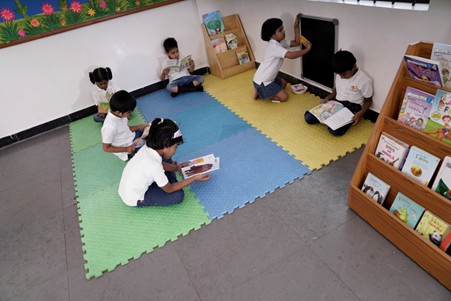
Reading Corners and Library Periods
Dedicated
reading spaces and regular library sessions foster a reading culture. At Vidyanjali Academy, the library is a
central hub filled with age-appropriate, multicultural literature that keeps
curiosity alive.
How Do Teachers Encourage Writing Skills in Primary School?
Writing
is more than handwriting, it’s the expression of thought. Teachers use varied
activities to make writing fun and purposeful.
Sentence Formation
Students
begin by forming simple sentences, gradually progressing to paragraphs. Visual
prompts or picture cards often serve as writing cues.
Journaling and Creative Writing
Daily
journals encourage reflection, while creative writing tasks, short stories,
poems, and letters stimulate imagination.
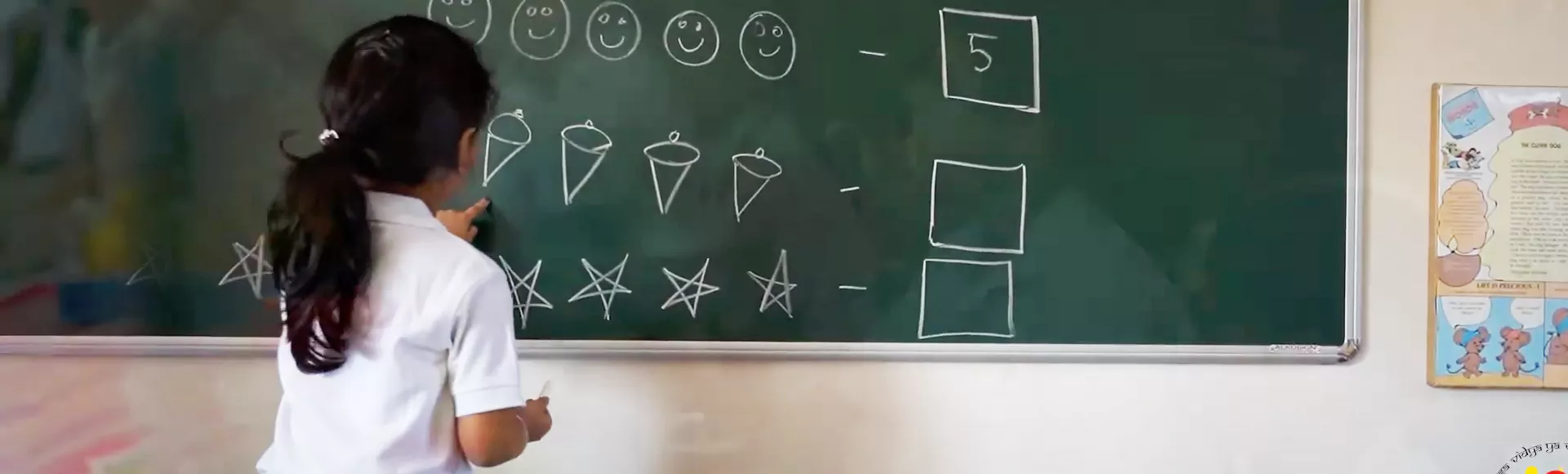
Picture-based Writing Prompts
Children
describe what they see in images, helping them connect words with visual
understanding.
Grammar through Play
Instead
of drills, teachers use games and group challenges to teach spelling and
grammar. This approach builds enthusiasm and memory retention.
Spelling Games
Word
puzzles, spelling bees, and word-building competitions reinforce phonics and
vocabulary.
At
Vidyanjali Academy, writing activities are designed to make expression
effortless. Every piece of writing, whether imaginative or factual, is
celebrated, instilling pride and motivation in young learners.
How Does Storytelling Help in Language Learning?
Storytelling
is one of the most powerful tools in language education. It seamlessly connects
emotion, culture, and communication, creating a rich context for learning.
Builds Listening Skills:
Children learn to pay attention, follow narratives, and predict outcomes.
●
Enhances Vocabulary: Exposure to new
words in context makes retention natural.
●
Improves Sentence Structure: Repeated
storytelling strengthens syntax and fluency.
●
Encourages Participation: Asking
questions during stories builds confidence and public speaking ability.
●
Promotes Cultural Awareness: Folk tales
and myths preserve heritage and broaden understanding of different communities.
At
Vidyanjali Academy, storytelling sessions often include puppetry, drama, and
music, making language come alive through imagination.
What Role Do Parents Play in Supporting Language and Literature at Home?
Parents
are the first teachers in a child’s linguistic journey. Their involvement
significantly reinforces school learning.
●
Reading Together: Shared reading builds
bonding and boosts comprehension.
●
Reducing Screen Time: Limiting digital
exposure encourages focus on books and conversations.
●
Storytelling and Conversations:
Discussing daily events, narrating experiences, or inventing stories develops
language naturally.
●
Collaboration with Teachers: Regular
communication ensures consistent progress monitoring and shared strategies for
improvement.
Vidyanjali
Academy actively involves parents through reading programmes and workshops that
teach them effective home-based literacy strategies.
What Are the Modern Tools Used to Teach Language Today?
The
integration of technology has transformed language teaching in primary schools,
making learning more interactive and engaging.
●
Digital Reading Platforms: Tools like Epic! and Oxford Owl provide vast
libraries for guided digital reading.
●
Interactive Whiteboards: Teachers use
multimedia content to make lessons visual and engaging.
●
Audiobooks and Podcasts: Listening to
stories improves pronunciation and comprehension.
●
Mobile Apps: Apps such as Duolingo Kids
and Vocabulary Spelling City gamify language learning.
●
Language Games: Digital games make
vocabulary and grammar practice interactive and fun.
At
Vidyanjali Academy, technology complements classroom teaching, ensuring a
balance between digital innovation and traditional reading habits.
What Is the Language Curriculum Followed in Indian Primary Schools?
Most
Indian schools, including Vidyanjali Academy, follow NCERT or CBSE guidelines which emphasises language proficiency and
literacy.
●
Multilingual Emphasis: Children are
encouraged to learn both English and their mother tongue, ensuring strong
linguistic roots.
●
Integrated Skills Approach: Reading,
writing, listening, and speaking are taught collectively rather than in
isolation.
●
Cultural Relevance: Literature from
regional and global authors broadens perspectives.
●
Grade-wise Outcomes:
○
Grade 1–2: Learning basic
phonics, simple sentences, and rhymes.
○
Grade 3–4: Expanding
vocabulary, reading short stories, and writing paragraphs.
○
Grade 5: Analysing short texts,
writing essays, and exploring creative expression.
The
curriculum ensures language learning goes beyond mechanics to inspire
communication and creativity.
How Are Students Assessed in Language and Literature?
Language
assessment focuses on understanding and expression, not just correctness.
●
Oral Assessments: Include recitations,
storytelling, and presentations to evaluate pronunciation and fluency.
●
Written Tests: Cover grammar,
comprehension, and composition.
●
Creative Writing Tasks: Assess
originality, vocabulary, and coherence.
●
Reading Comprehension: Measures
understanding and interpretation of text.
●
Listening and Speaking Rubrics: Evaluate
pronunciation, confidence, and interaction skills.
How Does Vidyanjali Academy Excel in Teaching Language and Literature?
Vidyanjali
Academy has earned its reputation as one of the best schools for primary
education due to its language-rich environment and holistic teaching model.
●
Child-centric Approach: Every child
learns at their own pace through personalised support.
●
Language-rich Environment: Classrooms
are filled with books, displays, and interactive learning materials that
inspire curiosity.
●
Expert Educators: Trained teachers
specialise in phonics, grammar, and literature pedagogy.
●
Integrated Learning: Programmes in
drama, debate, and reading clubs promote confidence and creativity.
●
Balanced Bilingual Focus: Equal emphasis
on English and the mother tongue ensures cultural and linguistic fluency.
●
Proven Outcomes: Alumni and parent
testimonials consistently highlight exceptional communication skills and
literary appreciation among Vidyanjali students.
Parents
seeking a school that values both linguistic excellence and holistic growth are
encouraged to visit Vidyanjali Academy. Discover how its dynamic language and
literature programmes empower young learners to become articulate, confident,
and compassionate communicators.
1. What is the right age to start reading to a child?
You can begin reading aloud to children as early as
infancy. By age three, regular story sessions build listening skills and
vocabulary.
2. Which books are best for primary school students?
Age-appropriate classics like The Gruffalo, Charlotte’s Web, and folk tales introduce storytelling, morals, and imagination.3. How can I improve my child’s writing skills?
Encourage journaling, creative prompts, and letter-writing. Praise effort and creativity more than correctness.4. What language skills should a Grade 1 student have?
By Grade 1, children should recognise basic sight words, read short sentences, and express simple ideas verbally.5. Is English the only language taught in primary school?
No. Most Indian schools teach English alongside regional languages, promoting multilingual literacy.