


What Is Environmental Sustainability in Schools?
At
Vidyanjali Academy, sustainability means using today’s resources wisely to
protect tomorrow’s world. This principle guides both our operations and
education. We adopt eco-friendly practices, energy-efficient infrastructure,
waste reduction, water conservation, and renewable energy use, to minimize our
environmental impact and maintain a healthy campus. Our curriculum embeds
environmental learning across subjects, teaching students about ecosystems,
human impact, and sustainable solutions to foster responsible global citizens.
Global Frameworks Guiding Us
●
Eco-Schools Program: Provides a
structured path to sustainability, earning us recognition like the Green Flag.
●
Green Schools Program: Empowers students
to lead conservation and waste management efforts.
●
UN SDG 4.7: Shapes our mission to equip
students with values for sustainable living and global citizenship.
By
aligning with global standards, Vidyanjali Academy cultivates a lasting culture
of sustainability, preparing students to lead with responsibility and vision.
What Are the Benefits of Environmental Sustainability Initiatives in Schools?
At
Vidyanjali Academy, environmental sustainability is integral to our mission of
shaping responsible global citizens. Our initiatives deliver practical,
financial, educational, and social benefits:
1.
Environmental Impact: Through
energy-efficient systems and waste reduction, we lower our carbon footprint and
conserve resources, offering students real-world examples of ecological
responsibility.
2.
Financial Savings: Sustainable practices
reduce utility costs. Savings are reinvested into academic programs and
infrastructure, enhancing the overall learning environment.
3.
Educational Value: Students engage in
hands-on sustainability projects, like gardening and recycling, that build
critical thinking, leadership, and civic responsibility.
4.
Social Impact: Community-focused
initiatives extend learning beyond the classroom, promoting awareness and
empowering students to lead positive change.
What Sustainability Initiatives Can Be Implemented in Schools?
Vidyanjali
Academy is committed to fostering environmental stewardship through practical
waste management practices:
●
Segregation Bins: Clearly labeled bins
across campus encourage proper disposal of recyclables, organic waste, and
general trash.
●
Recycling & Composting: We run
focused programs for paper and e-waste recycling. Organic cafeteria waste is
composted and used in our gardens.
●
Student-Led Waste Audits: Students
actively participate in waste audits, gaining hands-on experience in
sustainability and waste reduction.
Through
these initiatives, Vidyanjali Academy not only minimizes its environmental
footprint but also equips students with lifelong eco-conscious habits.
What Energy Conservation Measures Are Effective in Schools?
Vidyanjali
Academy is committed to sustainability through practical energy, water, and
environmental initiatives.
Energy Conservation: We
use energy-efficient LED lighting, solar panels for partial power supply, and
motion sensors to automatically reduce electricity use.
Water Conservation:
Rainwater harvesting supports irrigation, while regular leak checks and
low-flow fixtures ensure minimal water wastage.
Green Spaces & Education: Our gardens serve as outdoor classrooms, enhance student
well-being, support biodiversity, and are integrated into science and
environmental curricula.
How Do Schools Promote Sustainable Transportation?
At
Vidyanjali Academy, environmental sustainability is a core part of our
educational philosophy. We aim to instill in students a sense of responsibility
for the planet through practical, eco-friendly initiatives, especially in
transportation.
Bike-to-School Program: We
encourage cycling through secure on-campus bike parking and regular workshops
on road safety, cycling skills, and bike maintenance. This promotes both
physical health and eco-conscious commuting.
Carpooling Incentives:
Families are urged to share rides to reduce traffic and emissions. We support
this with designated carpool parking and recognition for regular participants,
strengthening community bonds while protecting the environment.
Public Transit Support:
Partnering with local transit authorities, we provide route and schedule
information aligned with school timings, making public transport a convenient
and sustainable option for students.
Vidyanjali
Academy is committed to shaping environmentally responsible citizens through
action-driven education.
How Can Sustainability Be Integrated Into the School Curriculum?
At
Vidyanjali Academy, environmental sustainability is woven into the curriculum,
not added on. By blending Montessori principles with the CBSE framework,
students engage with sustainability through inquiry, collaboration, and
real-world problem-solving.
●
Science: Students explore climate
change, renewable energy, and biodiversity through hands-on experiments like
energy audits and water testing, fostering both scientific insight and
environmental awareness.
●
Geography: Lessons focus on
human-environment interactions, using maps and case studies to help students
analyze sustainability issues and propose practical solutions.
●
Civics: Through discussions on
environmental laws and rights, students become active citizens, participating
in debates, simulations, and advocacy projects.
●
Project-Based Learning: Students tackle
real challenges by creating school gardens, designing waste-reduction
initiatives, and building sustainable city models, developing leadership and
problem-solving skills.
●
Interdisciplinary Approach:
Sustainability themes connect across subjects. A single unit may combine
science, policy, economics, and the arts, offering a well-rounded, holistic
education.
How Does Vidyanjali Academy Implement Environmental Sustainability Initiatives?
At
Vidyanjali Academy, environmental sustainability is deeply woven into the
fabric of our educational philosophy. Guided by our mission to develop socially
responsible citizens, we actively engage students, parents, and the broader
community in initiatives that foster ecological awareness and stewardship.
Integrating Sustainability into Daily Learning
Our
Montessori approach emphasizes experiential learning, allowing students to
connect with nature through hands-on activities. During events like Colour’s
Week, children participate in seed sowing and create art using natural
materials, cultivating an early appreciation for the environment.
Promoting Waste Segregation and Recycling
We have
implemented comprehensive waste segregation practices within the school
premises. Students are educated on the importance of separating recyclables,
compostables, and non-recyclables, instilling habits that contribute to a
cleaner and more sustainable environment.
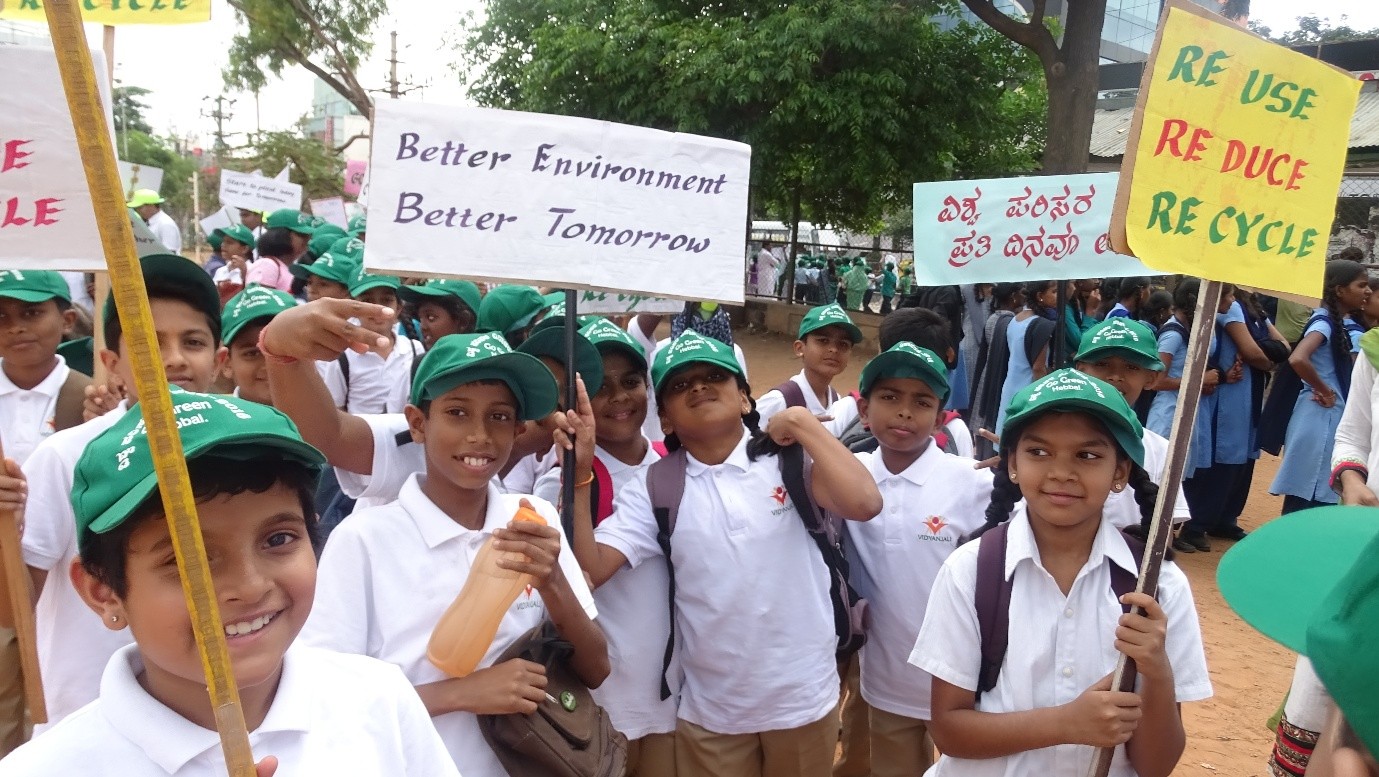
Encouraging Tree Plantation Drives
Tree
plantation is a regular activity at Vidyanjali Academy. Students, along with
teachers and parents, actively participate in planting saplings within the
school campus and the surrounding areas. These drives not only enhance green
cover but also teach students the significance of trees in maintaining
ecological balance.
Fostering Community and Parental Involvement
We
believe that sustainability is a collective effort. Our Parent Engagement
Conferences serve as platforms to discuss and promote environmental
initiatives, encouraging parents to adopt eco-friendly practices at home.
Collaborations with local organizations further amplify our impact, allowing
students to engage in community-based environmental projects.
At
Vidyanjali Academy, environmental sustainability is woven into the fabric of
our educational philosophy. Rooted in the Montessori approach, we believe that
nurturing a deep respect for nature from an early age fosters responsible,
eco-conscious citizens. Our commitment to sustainability is reflected not only
in our curriculum but also in our community engagement and cost-effective green
initiatives.
What Role Does the Community Play in School Sustainability?
Community
involvement is pivotal in advancing our sustainability goals.
Parent Volunteers
Parents
actively participate in our environmental programs, from organizing tree
plantation drives to leading waste segregation workshops. Their involvement
reinforces the importance of environmental stewardship both at school and at
home.
NGO Partnerships
Collaborations
with local NGOs have been instrumental in enhancing our sustainability
initiatives. These partnerships provide valuable resources and expertise,
enabling us to implement effective environmental programs and workshops for our
students.
Local Government and CSR Support
We engage
with local government bodies and corporate entities to secure support for our
sustainability projects. Through Corporate Social Responsibility (CSR)
initiatives, we have received funding and resources that bolster our
environmental programs, ensuring their longevity and impact.
What Are the Most Cost-Effective Green Initiatives for Schools?
Implementing
sustainable practices doesn't necessitate significant financial investment. At
Vidyanjali Academy, we've adopted several low-cost initiatives that make a
substantial impact:
Waste Segregation and Recycling
We have
established a comprehensive waste segregation system within the school
premises. Students are educated on the importance of separating biodegradable
and non-biodegradable waste, promoting recycling and reducing landfill
contributions.
Awareness Drives
Regular
awareness campaigns are conducted to instill environmental consciousness among
students. Activities such as poster-making competitions, debates, and eco-club
meetings encourage students to think critically about environmental issues and
solutions.
Energy Usage Tracking
By
monitoring our energy consumption, we identify areas where we can reduce usage
and implement energy-saving measures. Simple actions like turning off unused
lights and utilizing natural light contribute to our energy conservation
efforts.
DIY Green Projects
Students
engage in hands-on projects like creating upcycled art from waste materials and
cultivating native plant gardens. These activities not only enhance creativity
but also teach the value of resourcefulness and biodiversity.
Funding Opportunities
We
actively seek funding through government schemes and CSR programs to support
our sustainability initiatives. These funds have enabled us to expand our
environmental programs and incorporate more comprehensive sustainability
education into our curriculum.
Through
these community-driven and cost-effective initiatives, Vidyanjali Academy
continues to foster an environment where sustainability is not just taught but
practiced daily, preparing our students to be conscientious stewards of the
environment.