

In
primary school, children start forming the habits that shape how they learn for
years. Whether they wait for the “right answer” or learn to think their way to
one. At Vidyanjali Academy, we build critical thinking and problem-solving
through hands-on learning, purposeful questions, and space for children to
explain their reasoning. The goal is simple: help every child become confident
in how they think, not just what they remember.
In this
blog, we will take a look at the age-appropriate ways to nurture these skills
in everyday classroom and home routines. We will also highlight what parents
can look for in a primary school environment that genuinely supports
independent thinking.
What Is Critical Thinking and Why Is It Essential for Primary School Students?
Critical
thinking is the ability to question, analyse, and evaluate information rather
than simply accept it. In primary school, this means encouraging children to
explore, reflect, and think independently instead of memorising answers. It
helps them make connections, assess choices, and approach challenges with logic
and curiosity.
At
Vidyanjali Academy, these skills are introduced from the very beginning, not as
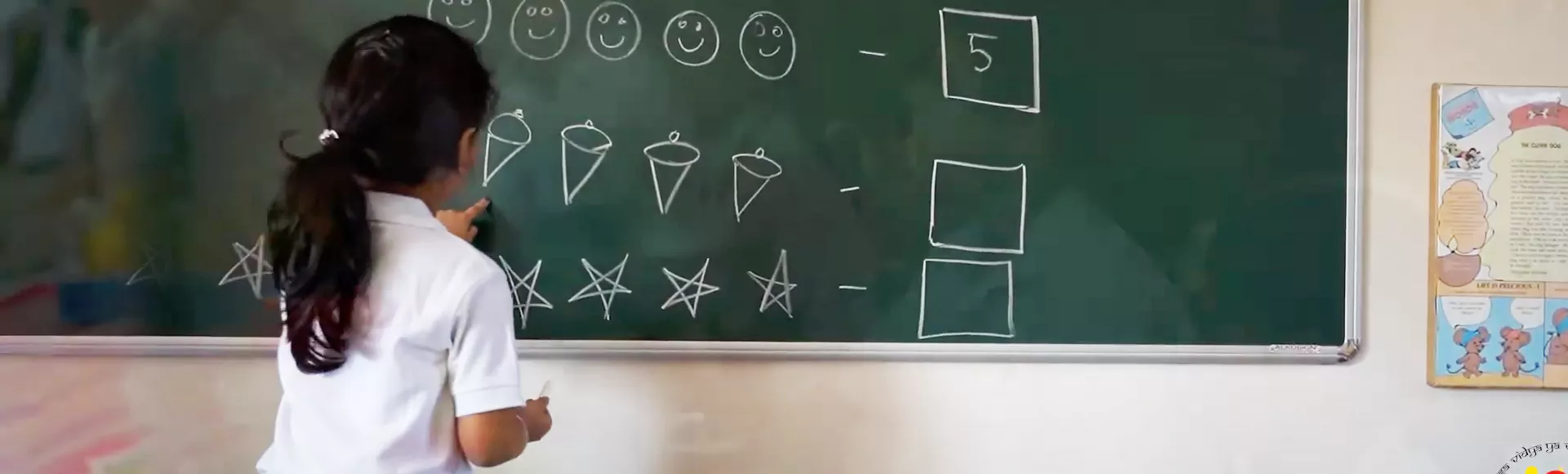
isolated lessons, but as part of how children learn every day. Through hands-on
activities, peer discussions, and guided problem-solving, we help students
build a mindset that is thoughtful, adaptable, and solution-focused, which are
essential traits in today’s fast-changing world.
In fact,
the 21st century demands more than academic knowledge alone. To thrive,
students need creativity, adaptability, and the ability to learn continuously.
This is why both UNESCO and India’s NEP 2020 emphasise the importance of
skill-based education, especially in the foundational years.
How Do Children Develop Critical Thinking Skills at an Early Age?
At
Vidyanjali Academy, we believe critical thinking begins long before a child can
put it into words. It is built through observation, exploration, and the
freedom to ask “why” every single day.
Understanding Cognitive Development
Jean
Piaget’s theory outlines how children move through stages of thinking, from
sensory exploration as infants to symbolic play in early childhood, and logical
reasoning in later years. We structure our Montessori environments to match
these stages, offering the right kind of challenges at the right developmental
moment.
Play and Exploration Build Thinking Muscles
In early
childhood, indulging in playful activities is not a break from learning, but it
supplements learning. Through open-ended materials, pretend play, and
real-world activities, children test ideas, solve problems, and begin to
understand cause and effect. They explore “what happens if” in a safe and
supportive space.
Curiosity Drives Deeper Thinking
Children
at Vidyanjali are encouraged to ask questions, both big and small. Teachers
respond with prompts that spark further exploration rather than providing fixed
answers. This approach keeps curiosity alive and builds habits of independent
thinking instead of passive listening.
Home and School Work Together
Critical
thinking does not start and stop at school. At home, children thrive when
adults model reflection, invite questions, and allow time for unstructured
play. At school, our mixed-age classrooms, freedom within limits, and hands-on
materials provide an ideal setting for daily discovery.
What Are the Best Teaching Strategies to Promote Critical Thinking in Primary Classrooms?
At
Vidyanjali Academy, critical thinking is not treated as a separate skill; it is
woven into how children explore, question, and create every day. Our teaching
strategies are carefully chosen to help young learners become thoughtful,
independent, and curious problem-solvers.
Inquiry-Based Learning
Children
learn best when they are encouraged to ask their own questions. Instead of
providing answers upfront, we design lessons that begin with curiosity, such as
“Why do plants need sunlight?” or “What would happen if gravity stopped
working?” From science experiments to story-based discussions, inquiry-based
learning helps students think more deeply, connect ideas, and form conclusions
on their own.
Socratic Questioning
Rather
than telling students what to think, we ask them how they arrived at an answer.
Socratic questioning involves prompts such as “What makes you say that?” or “Is
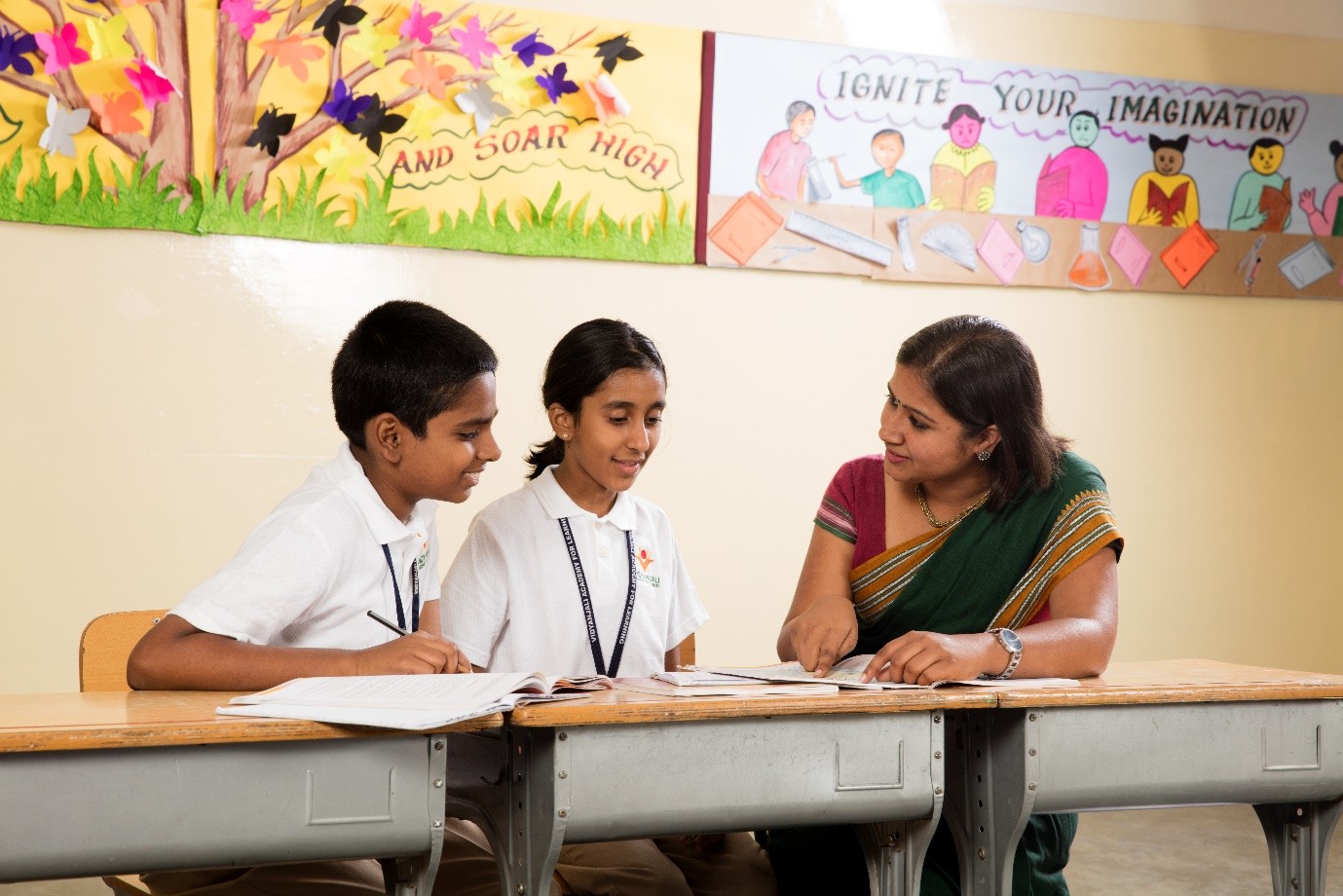
there another way to look at it?” These discussions help students articulate
their reasoning, consider multiple perspectives, and evaluate evidence, even in
the early grades. It also teaches them that it is acceptable to change their
minds when new ideas emerge.
Project-Based Learning
We often
use real-world themes, such as building a sustainable city or designing a
school garden, as the foundation for longer-term projects. Through planning,
researching, and presenting, students tackle open-ended problems that require
critical thinking and decision-making. They also learn to manage time, work
through challenges, and reflect on their process, skills that extend beyond the
classroom.
Collaborative Learning
Group
work at Vidyanjali is not just about working together; it involves listening,
challenging ideas respectfully, and building on one another’s thinking. Whether
solving a maths puzzle in pairs or debating a story’s ending in small groups,
students learn to defend ideas, shift perspectives, and reach shared
conclusions, which are essential skills for critical thinking.
Technology and Games as Thinking Tools
When used
intentionally, technology becomes a powerful tool for building logic, strategy,
and reasoning. We use platforms such as Scratch for coding stories and
animations, and Minecraft Education Edition for creative problem-solving in
digital environments. These tools are more than games; they are open-ended
spaces where thinking is visible, and mistakes are part of the learning
process.
How Does Vidyanjali Academy Nurture Problem-Solving and Higher-Order Thinking?
At
Vidyanjali Academy, developing independent thinkers is a core part of our
learning philosophy. Problem-solving, critical thinking, and higher-order
reasoning are not treated as separate skills; they are built into daily
classroom experiences and teacher-led strategies.
Practical Activities That Build Problem-Solving Skills
Students
engage in hands-on, open-ended tasks that spark curiosity and develop logical
reasoning. Examples include:
●
Logic puzzles and brain teasers
to build pattern recognition and lateral thinking
●
Group challenges and case
studies that require collaboration and decision-making
●
Storytelling with multiple
endings, where children explore different choices and outcomes
●
STEM-based experiments and
maths riddles that integrate theory with creativity
●
Creative writing prompts with
built-in problems to solve through narrative thinking
These
activities give students opportunities to ask questions, test ideas, and arrive
at conclusions through exploration rather than memorisation.
Teacher Roles in Higher-Order Thinking Development
Teachers
at Vidyanjali Academy are trained to go beyond content delivery. They design
lessons using Bloom’s Taxonomy, ensuring that students move from remembering
and understanding to analysing, evaluating, and creating.
Professional
development sessions focus on reflective practice, where teachers examine their
own methods and adapt them to meet the needs of different learners. In the
classroom, they:
●
Encourage metacognition by
asking students to think about their own thinking
●
Invite self-evaluation, helping
learners understand their progress and areas for improvement
●
Create a safe space where
failure is part of the learning process rather than something to be feared
This
approach helps children become confident and resilient thinkers who are willing
to try, refine their ideas, and engage deeply with learning.
Home-School Partnerships That Support Critical Thinking
Problem-solving
does not stop at school, and neither does our partnership with parents. We
actively involve families in this journey through:
●
Parent engagement activities
such as collaborative projects, reading circles, and STEM fairs
●
Workshops and learning sessions
where families explore ways to support critical thinking at home
●
Two-way communication between
teachers and parents to align strategies and share insights
Together,
we create a consistent environment at school and at home that encourages
children to think independently, reflect openly, and tackle challenges with
confidence.
How Does Vidyanjali Academy Excel in Promoting Critical Thinking Among Primary School Students?
At
Vidyanjali Academy, promoting critical thinking is an intentional part of our
curriculum and teaching culture. We move beyond traditional rote methods by
combining an innovative curriculum with holistic teaching practices that
encourage students to question, explore, and draw connections across subjects.
Our approach reflects the spirit of NEP 2020, which emphasises inquiry-based
learning, deep understanding, and the application of knowledge rather than
memorisation.
Examples
of this focus on student thinking include structured problem-solving workshops,
thematic learning units, and student-led projects that require research,
planning, reasoning, and presentation. In these settings, children learn to
frame questions, test ideas, and justify their conclusions in clear and
reflective ways. Many parents and teachers note that students begin to approach
challenges with curiosity and resilience, outcomes we intentionally nurture
through purposeful classroom practices and reflection time.
We are
affiliated with the CBSE curriculum and integrate its requirements with
practices that align with NEP 2020 goals.
What Are Some Global Best Practices in Teaching Critical Thinking at the Primary Level?
Around
the world, high-performing education systems deliberately cultivate critical
thinking through experiential, student-centred learning that places learners at
the heart of the process.
Countries
such as Finland, Singapore, and Australia provide useful examples:
●
Finland emphasises flexible
curricula and inquiry-based learning, where students explore concepts
collaboratively and teachers act as facilitators rather than strict lecturers.
This focus on exploration has been linked to high engagement and deep student
understanding.
●
Singapore’s education model
includes strong problem-solving frameworks across subjects, along with robust
teacher training that encourages questioning and higher-order thinking rather
than rote recall.
●
Australia has shown strong
outcomes in global creative thinking assessments, reflecting classroom
practices that support idea generation, confidence in thinking, and open-ended
inquiry.
These
systems share common practices that closely align with our own:
●
Experiential learning, where
students interact with real problems and materials (
●
Student-centred instruction
that prioritises questioning, collaboration, and reflection
●
Teacher facilitation that
supports, rather than directs, discovery
International
assessments like PISA’s creative thinking evaluations
illustrate the value of these approaches. Students who engage in open-ended,
inquiry-driven tasks develop flexible thinking skills that are essential in a
rapidly changing world.
How Can We Measure Critical Thinking and Problem-Solving Skills in Young Learners?
At
Vidyanjali Academy, we use multiple tools to observe and support how children
think, question, and solve problems, not just the answers they produce.
Assessment Rubrics
These
provide clear, age-appropriate criteria for skills such as reasoning, idea
generation, and decision-making. Teachers use them during real-time
observations to assess how students approach challenges.
Formative vs. Summative Assessments
●
Formative assessments take
place during daily classroom activities, with teachers noting how students
reason through tasks, adapt strategies, or collaborate with peers.
●
Summative assessments are used
selectively to evaluate how children apply their understanding in broader
contexts.
Student Portfolios and Self-Reflection Journals
Each
child maintains a portfolio that includes project work, progress notes, and
moments of insight. Self-reflection journals allow students to record what they
tried, what worked, and what they would like to do differently, supporting
metacognitive development from an early age.
Peer Assessments
During
group activities and projects, children are guided to give one another feedback
in constructive and age-appropriate ways. This promotes self-awareness,
empathy, and collaborative thinking.
Together,
these tools provide a fuller picture of a child’s problem-solving mindset,
focusing not only on outcomes but also on the thinking processes behind them.
Book a visit to Vidyanjali Academy and see how we help children think and solve problems with confidence.
1. Can primary students handle abstract thinking?
Yes, when
a strong foundation is built through concrete experiences. In Montessori
education, children move gradually from hands-on materials to abstract ideas,
making abstract thinking accessible even in the early years.
2. How is critical thinking different from logical thinking?
Logical
thinking focuses on following rules and patterns. Critical thinking involves
evaluating information, asking questions, and making informed decisions.
Montessori education develops through exploration, discussion, and reflection.
3. Are problem-solving skills part of the curriculum in India?
Yes,
although how they are taught varies by school. At Vidyanjali Academy,
problem-solving is integrated into daily activities, from maths, Social, and
science to real-life social situations, helping children learn to think
independently and adaptively.