


Parents
and the community are an integral part of shaping the learning journey of the
students at Vidyanjali Academy. There is a close relationship between the home
and school world that provides the child with a sense of being supported and
cared for both academically and emotionally. If parents are meaningfully
involved, it delivers a strong message to children about the way education
matters.
The
academy further stresses the relevance of community involvement to achieve the
academy's mission. Events, activities, and joint projects bring students,
parents and the wider community into the same space. This methodology not only
improves learning but also develops some values, such as empathy, teamwork, and
social responsibility. So, keep reading to understand how parental involvement
shapes the learning trajectory of students at Vidyanjali Academy.
What is Vidyanjali Academy's Approach to Parental Involvement?
Vidyanjali
Academy takes parents to be the primary and first teachers of a child.
According to the principles of Maria Montessori, parental involvement is seen
as one partnership upon which the education of the child rests. We develop
programs, for example, Parent Engagement Conferences, to inform parents about
their child's progress. These are not simply sessions on marks but sessions on
the child's emotional and academic development. Parents are implicitly
encouraged to ask questions, raise concerns, and discuss with teachers how to
address problems.
The
annual Parent Empowerment Day, celebrating Maria Montessori's birthday also
equips parents with information on issues such as emotional intelligence, child
psychology, and nutrition. In addition, these workshops give parents the tools
and information that can help their children at home.
How Does Vidyanjali Academy Foster Community Engagement?
The
broader community plays a significant role in shaping the culture at
Vidyanjali. The school encourages students and parents to connect with the
community through meaningful initiatives. These activities teach students about
compassion, leadership, and social responsibility.
For
example, students have helped make the day of child cancer patients more
cheerful by decorating their rooms during rounds at the hospital. Profits made
from school programs such as Munch Mela and Namma Santhe are shared with
orphanages, perpetuating the tradition of giving back. Moreover, students
attend government schools to work on arts and crafts projects and to get
acquainted with their peers of diverse backgrounds.
These
events and initiatives create a supportive and inclusive environment where
everyone feels valued. They also help students develop a sense of belonging and
responsibility toward their community.
What Are the Benefits of Community and Parental Involvement in Education?
When
parents and the community work together, the impact on education is profound.
Students with engaged parents perform better academically. They are more likely
to develop positive attitudes toward learning and have better social skills.
Parental
involvement also provides emotional support. Children feel more confident
knowing their parents are invested in their education. At Vidyanjali, this
involvement goes beyond academics and helps students grow into well-rounded
individuals.
The
school culture benefits too. A strong partnership between parents, teachers,
and the community creates a positive and collaborative atmosphere. It
encourages open communication, mutual respect, and shared responsibility for
student success.
What Specific Opportunities Does Vidyanjali Offer for Parental Involvement?
At
Vidyanjali Academy, there are many ways by which parents can make their
contribution. Parent-teacher meetings are the most important components of this
communication. These meetings provide parents with information on the strengths
and weaknesses of their children. Teachers, in turn, teach parents how they can
contribute to the home learning process.
The
school values parental input in decision-making processes. Parents can join
advisory boards or school councils. They are capable of producing concepts and
ideas that can be used in policy and program design. Social events and
workshops also help rebuild the relationship between parents and the school
community.
How Does Vidyanjali Communicate with Parents?
Effective
communication is key to building trust and collaboration. Vidyanjali Academy
uses multiple platforms to keep parents informed. Email, newsletter, and mobile
apps keep them informed of academic performance, events, and important
announcements.
The
parent portal Edumerge is a useful tool to monitor child performance. It has
easy access to academic records and teachers' feedback, like grades,
attendance, etc. Frequent updates keep parents in the loop about their child's
activity and the same being achieved. Vidyanjali believes in open and
transparent communication. Parents are welcome to contact teachers if the need
arises
What Programs and Workshops are Available for Parents at Vidyanjali Academy?
Vidyanjali
Academy offers a range of programs to empower parents. Workshops on issues such
as parenting skills, emotional intelligence and technology use provide
effective ways for parents to assist their children. These sessions are
practical and easy to understand so that parents feel confident in applying what
they learn.
The
school also organizes training sessions to help parents navigate the challenges
of home-based learning. Tips on how to make a study environment productive, how
to use digital technology competently, and how to maintain academic progress
are discussed during these sessions.
How Can Parents Volunteer at Vidyanjali Academy?
Volunteering is one effective way for parents to contribute to their child's learning. Vidyanjali offers several opportunities for parents to contribute.
Signing
up to volunteer is simple. Parents can indicate their interest through the
school parent portal or by calling the school office. Transparent guidelines
are laid out that will help assure everyone has an enjoyable, experiential
negative experience.
How Does Vidyanjali Encourage Family Involvement in Extracurricular Activities?
The
school actively promotes families to attend events such as sports meets, art
shows, and cultural programs. Parents are welcome to volunteer as coaches,
judges, or event organisers, where they can help to produce memorable student
experiences.
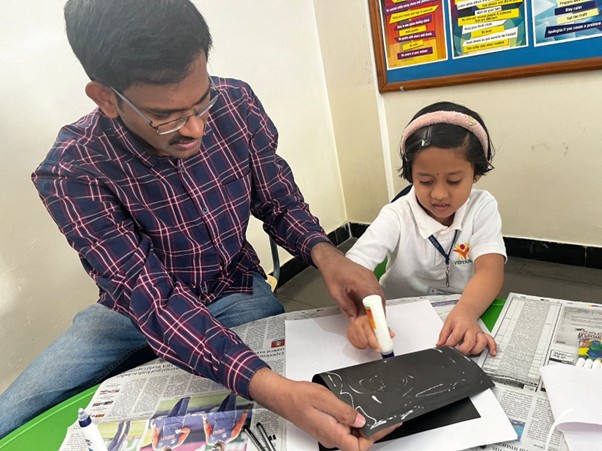
These
activities are also a chance for parents to bond with their children outside
the classroom. For example, during craft workshops and fancy dress
competitions, parents and children work together to bring creative ideas to
life. Such initiatives ensure that parents not only observe their child's
growth but also contribute to it.
How Can the Local Community Contribute to Vidyanjali Academy?
Vidyanjali
Academy has close ties with the neighbourhood. Partnerships among businesses,
organisations, and volunteers contribute to our school's programs. Community
members can also volunteer to tutor or help with school activities.
How Does Vidyanjali Academy Ensure Inclusivity in Parental Involvement?
Special
programs, like Parent Empowerment Day, address the diverse needs of families.
These sessions focus on various topics, such as children’s emotional
well-being, nutrition, and academic strategies. Through promoting inclusivity,
Vidyanjali gives a feeling of belonging to families to build a stronger school
community.
How Can Parents Stay Engaged with Their Child’s Learning Outside of School?
Vidyanjali
encourages parents to help with homework, discuss lessons, and use digital
platforms to monitor progress. For instance, the school offers online resources
that permit parents to track grades, attendance, and teacher comments.
Beyond
academics, parents are advised to engage in fun learning activities, like
reading together or exploring hobbies that align with their child’s interests.
These activities contribute to strengthening what students learn at school and
encouraging lifelong learning.
How Does Vidyanjali Measure the Success of its Parental Involvement Programs?
Vidyanjali
Academy measures the impact of its parent engagement activities in several
ways. The school gets insights from parents from surveys and talks. Parents
also discuss what is going well and how the school might be better.
Metrics
like student performance, participation in events, and the overall satisfaction
of families are closely monitored. Success stories from parents, such as
improved academic results or better emotional support for their children, serve
as real-life examples of the program’s impact. These evaluations help
Vidyanjali continuously refine its approach, ensuring every family feels
valued.