

At Vidyanjali Academy, children
learn with independence and curiosity. We follow the Montessori method, which
puts your child at the center of the learning process. Instead of rigid
lessons, we create a space where each child can explore, try things out, and
grow at their own pace.
Teachers here don’t lecture or
control the pace. They observe each child closely, offer support when needed,
and introduce new materials at the right time. This helps your child stay
motivated from within and stay focused without pressure.
Over time, this approach builds
more than just academic ability. It strengthens focus, self-discipline, and
genuine curiosity. Children learn how to work, think, and manage themselves in
a way that prepares them for the real world. As you learn more about our
approach, you’ll see how Vidyanjali Academy helps your child become confident,
capable, and eager to keep learning, skills that last a lifetime.
What Does Child-Centered Learning Mean in Montessori Education?
At the heart of Montessori
education is a simple but powerful idea: every
child learns differently, and education should adapt to the child, not the
other way around. This is what “child-centered learning” truly means in a
Montessori setting. But how does it actually look in practice, and how is it
different from traditional schooling?
What Makes Learning "Child-Centered"?
In Montessori, child-centered
learning means recognizing that children are active participants in their own
development. Instead of passively receiving information, they explore,
question, and learn through hands-on experiences. Teachers act as guides, not
lecturers, observing closely, then stepping in with the right tools or support
at the right moment.
This approach values each child’s
pace, interests, and readiness. Some may spend days mastering one skill; others
might move quickly. The key is that learning is never rushed or standardized,
it’s respected.
How Montessori Differs from Traditional Models
In a traditional classroom,
lessons are often teacher-led, time-bound, and delivered to a group regardless
of individual progress. In contrast, a Montessori classroom is organized around
the child’s needs. Students choose from purposeful activities, work at their
own speed, and often collaborate across age groups. Learning feels natural, not
imposed.
There are fewer tests, no grading
curves, and no one-size-fits-all curriculum. Instead, progress is measured by
mastery, not memorization.
The Core Principles of Montessori’s Child-Centered Approach
Montessori education doesn’t just
claim to be child-centered, it’s built on foundational principles that make it
so:
●
Respect for the
Child: Every child is seen as capable,
curious, and worthy of autonomy. This respect is shown through active
listening, freedom to make choices, and recognition of their developmental
needs.
●
A Carefully
Prepared Environment: Classrooms are
designed to be calm, organized, and accessible. Every material has a purpose.
Children can reach what they need, return it when done, and move freely within
the space. The environment teaches as much as the instructor.
●
Individualized
Learning Paths: Children are
not expected to follow the same path at the same time. Learning is tailored
based on observations, interests, and readiness. This allows for deeper
engagement and long-term retention.
●
Freedom Within
Limits: Children are free to choose their work,
but within clearly defined boundaries. This balance fosters independence while
still teaching responsibility, self-regulation, and respect for others.
How Does a Montessori Classroom Truly Support Child-Centered Learning?
In a Montessori classroom, the
child isn’t expected to adapt to the system, the system is built around the
child. Everything, from the physical layout to the teacher’s role, is designed
to encourage curiosity, independence, and deep learning at a pace that’s right
for each individual. Here’s how that philosophy takes shape in practice.
1. The Montessori Environment: Order, Freedom, and Purpose
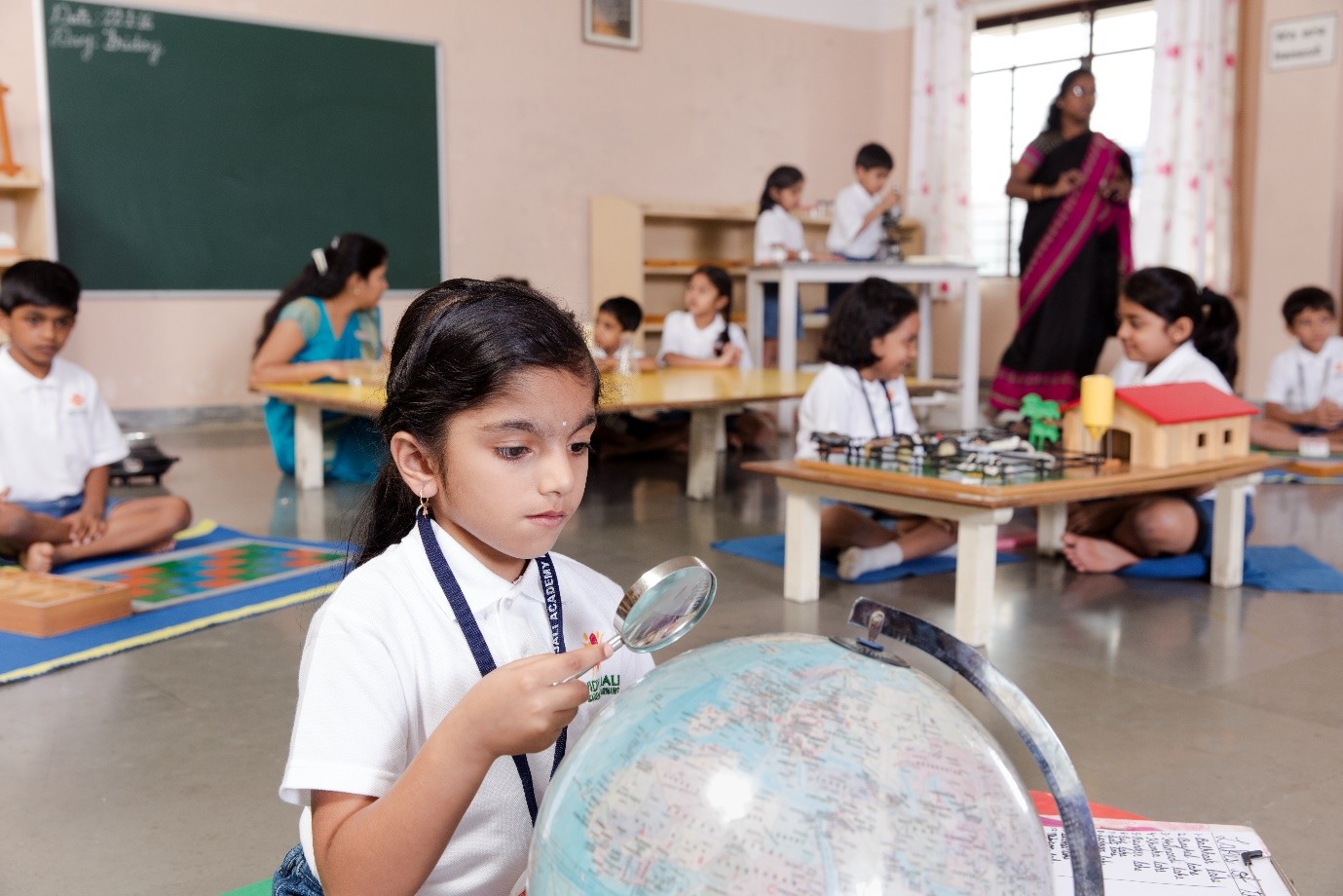
A Montessori classroom is calm,
open, and thoughtfully arranged. Shelves are low and materials are accessible
so that children can make choices without adult intervention. The space is
divided into clear areas, practical life, sensorial, language, math, and
cultural studies, each offering hands-on tools to explore abstract concepts
concretely.
2. Tools That Teach: The Role of Montessori Materials
Montessori materials are not just
educational aids, they are teaching tools in themselves. Each is designed to be
self-correcting, which means children can identify and learn from their
mistakes without needing constant feedback from an adult.
3. Freedom Within Structure: How Children Choose Activities
Children don’t just “do whatever
they want.” They are guided to make purposeful choices from a structured set of
activities appropriate for their age and development. Each child works at their
own pace, selecting tasks based on interest and readiness.
4. The Teacher’s Role: Guide, Not Lecturer
In Montessori classrooms, the
teacher’s presence is calm and intentional. Rather than delivering lectures or
directing the entire class at once, the teacher observes, prepares the
environment, and offers one-on-one or small-group presentations when a child is
ready.
5. Assessment Without Pressure: Measuring Progress Differently
Montessori education does not rely
on standard tests or grades. Instead, progress is measured through observation,
work portfolios, and milestone checklists aligned with developmental goals.
Teachers track how consistently a child engages with materials, the depth of
understanding shown in conversations and actions, and how confidently they
apply what they’ve learned.
How Do Children Learn in a Montessori Environment?
Montessori classrooms don’t look
or feel like typical schools. They’re designed more like calm learning spaces
where children can move, explore, and use real hands-on materials. You won’t
find worksheets here. What looks like freedom is actually structured. Children
make choices, but always with purpose and guidance.
1. Learning Through Choice and Purpose
Montessori puts self-directed
learning at the center. Children pick from materials that match where they are
in their development. They don’t just choose randomly, they pick what interests
them and what helps them learn best. Teachers don’t lead every step. Instead,
they watch, support, and step in only when it’s needed.
2.
Curiosity as a Driving Force
In
Montessori, curiosity leads the way. Teachers don’t push facts. Instead, the
classroom setup pulls children in. Materials are set out in a way that invites
exploration. Each new step builds on the last, and there are no gold stars or
prizes, just the joy of figuring things out.
3.
Why Multi-Age Classrooms Work
Instead
of dividing children by single-year grades, Montessori groups them by age
ranges, like 3–6 or 6–9 years. This helps younger children learn by watching
older ones. At the same time, older children get better at something by helping
others. This mix of ages teaches patience, kindness, and leadership. It also
removes the pressure to always be “the best.” Kids move at their own pace,
without being compared to classmates.
What Children Take With Them
When
children lead their own learning, they build real skills, like making decisions
and thinking for themselves. They’re not always waiting for instructions.
Instead, they’re asking: What should I work on? How much time do I need? Where
do I feel stuck?
They also
learn how to work with others. In a Montessori class, kids share space, wait
their turn, and solve small problems together. They learn how to speak up,
listen, and respect each other’s needs. Over time, this approach creates
confident learners who understand how to learn, how to lead, and how to treat
others well. Not just in school, but in life.
What Are the Common Misconceptions About Montessori and Child-Centered Learning?
A lot of
people think Montessori classrooms don’t have structure. That’s not true. The
structure is just different. It shows up in how the room is set up, how
activities progress, and how the day flows. Instead of following a strict
timetable, kids learn to manage their time and stay focused in an environment
that supports order and independence.
Another
worry is that kids don’t learn much without direct instruction. But they do,
because the teaching method is intentional. Montessori educators watch
carefully. They step in when needed and step back when it’s better to let the
child explore. This helps children build real motivation to learn and
understand things deeply, not just quickly.
Some
people also think Montessori is only for toddlers or preschoolers. That’s a
myth. The approach works just as well in primary school and even later. It
grows with your child. As they get older, the program adds more challenge,
responsibility, and real-world learning. At Vidyanjali Academy, we continue to
support each stage with purpose and care.
How is Progress Measured in Montessori’s Child-Centered Model?
Montessori
schools don’t give grades. Teachers observe your child’s work and note how they
solve problems and use materials. Progress is recorded through checklists, work
samples, and rubrics. You get regular updates, not just on academics, but on
social and emotional growth too.
It suits curious kids, like doing things on their own, and learn best
through hands-on tasks. If your child needs frequent reminders or has trouble
staying focused without guidance, they may need extra support. A classroom
visit can help you decide.
How You Can Support It at Home
Montessori
works best when home and school are in sync. Here’s how you can help:
●
Let them do things independently.
Pouring water, dressing, and cleaning up build confidence.
●
Pick simple, open-ended toys. Go for
puzzles, blocks, or real-life tools.
●
Give them time to explore. Let them try,
make mistakes, and figure things out.
● Keep spaces tidy and child-friendly. Make sure they can reach and return things on their own.
Can children really learn on their own in Montessori?
Yes, but
not without structure. Montessori classrooms are carefully designed to guide
self-learning through hands-on materials and subtle adult support.
What age is best to start Montessori education?
The ideal
age is 2.5 to 3 years, when children naturally seek independence and absorb
information rapidly through exploration and repetition.
Are there tests and grades in Montessori schools?
No
traditional tests or grades. Progress is tracked through detailed observation,
developmental checklists, and personalized feedback shared with parents.
How does Montessori-based learning prepare children for the future?
It builds
critical life skills, independence, focus, emotional intelligence, and
problem-solving, that help children adapt and lead in any environment.