

When you
think about your child’s school memories, you probably don’t picture test
papers first. You picture the first time they walked onto a stage, the painting
they proudly brought home, or the moment they found their rhythm in a group
dance.
At
Vidyanjali Academy for Learning, these moments are not “side activities.” They
are a central part of how Vidyanjali Academy for Learning nurtures confident, expressive,
and well-rounded learners. With a strong CBSE framework, deep Montessori roots,
and a rich co-curricular culture that includes Art, Craft, Music, Dance,
Yoga, Karate, Skating, Abacus and Vedic Maths. Vidyanjali treats the arts as a serious
pathway to growth, not just entertainment.
From
Annual Day productions and cultural celebrations to club presentations, talent
showcases, and features in Vidyanjali’s Bugle, students regularly get
platforms to sing, act, dance, sketch, mime, and present their ideas.
This page
explores how Vidyanjali showcases student talent in art shows and performances,
and why these experiences matter so much for children’s motivation, identity,
and future.
Why showcasing student talent matters at Vidyanjali
At
Vidyanjali, art shows, and performances are closely linked to Vidyanjali’s
vision of holistic development. As national policies like NEP 2020 and
CBSE’s art-integrated learning guidelines emphasize, the arts play a key role
in building creativity, expression, social skills, and emotional balance
alongside academics.
Academic motivation with a human face
When
children know they will sing in a choir, act in a skit, present a poem, or
exhibit their artwork, they bring a different level of effort to school.
Teachers at Vidyanjali often use performances and displays as natural deadlines
that help students:
●
Practice language skills while
scripting, narrating, or compering
●
Apply classroom concepts in
projects, props, and visual displays
●
Learn discipline and time
management while rehearsing regularly
Research
on art-integrated learning shows that such experiences can improve engagement,
comprehension, and retention by connecting concepts to real, creative tasks.
Cultivating genuinely well-rounded students
Co-curricular
listings for Vidyanjali highlight dance, music and arts as key opportunities for students,
alongside academic clubs and sports.
Through
these, children learn to:
●
Express joy, empathy, cultural
pride, and ideas that don’t always fit into a written answer
●
Work in teams, respect
different talents, and handle roles on and off the stage
●
Receive appreciation
gracefully, and handle nervousness or mistakes with resilience
This
combination of cognitive, emotional, and social learning is exactly what NEP
2020 calls “well-rounded development”, and Vidyanjali’s talent showcases are
one of the most visible ways that philosophy comes alive on campus.
Art shows and performances at Vidyanjali
Across
the year, Vidyanjali’s calendar includes cultural events, Annual Day
functions, and club-based activities where students perform, present, and
exhibit their work.
Some of
the ways this shows up:
●
Annual Day, and cultural
programmes where classes collaborate on thematic
dances, songs, skits, and musical pieces
●
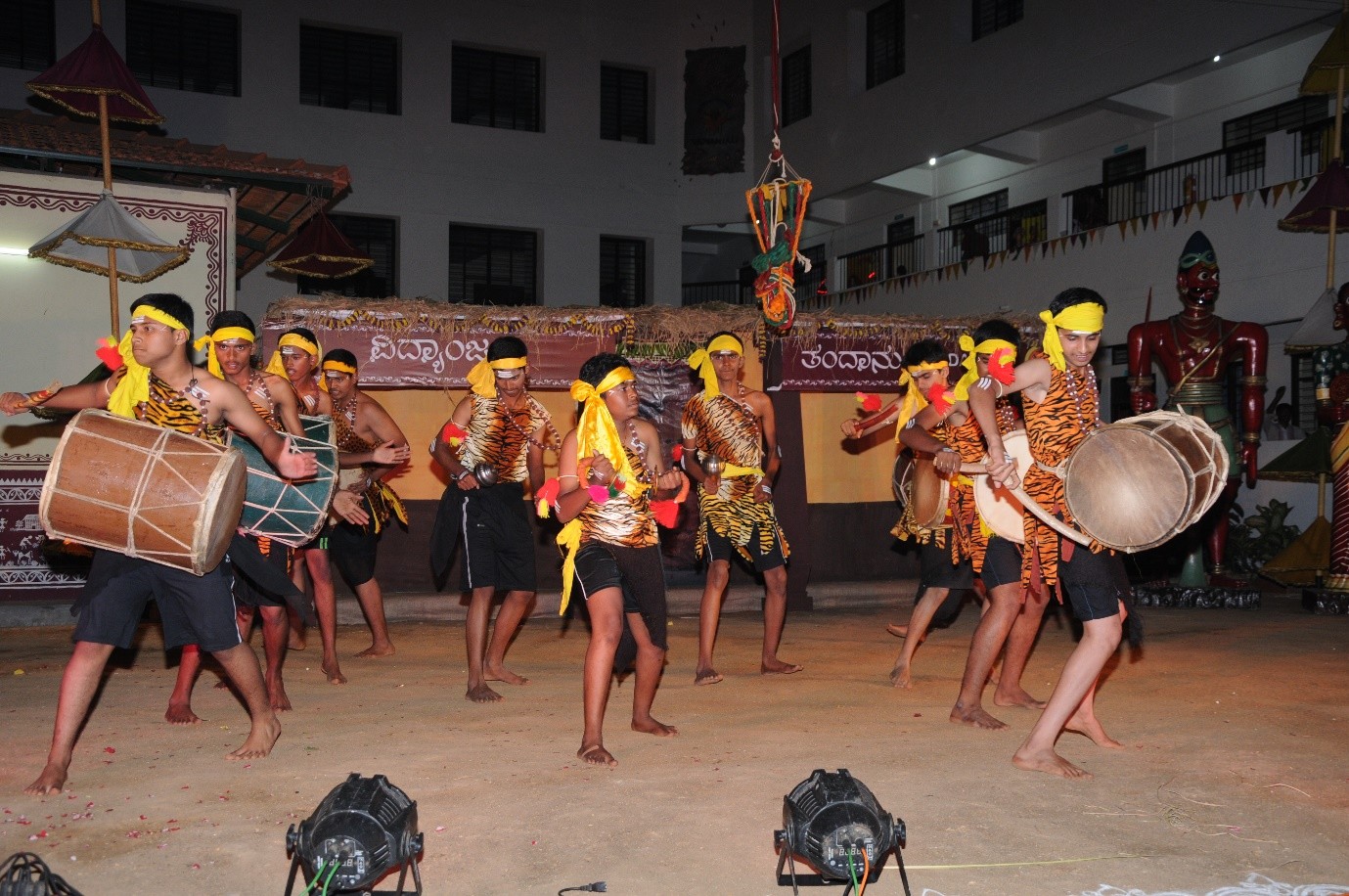
Festival celebrations (such as Dasara, Deepavali, Krishna Janmashtami, and Kannada
Rajyotsava) that feature traditional and contemporary performances
●
Intra-school talent
platforms documented in Vidyanjali’s Bugle,
with students showcasing miming, music, sketching, and theatre
●
Club presentations from Dance, Music, and Rhetorics (Communication) Club, where
students present what they have learnt in a more focused format
For many
students, these are the places where they find “their voice”, sometimes
literally.
Fostering a supportive school culture
Vidyanjali’s
spotlight pages and communication repeatedly stress that every student is
encouraged and nurtured, whether in academics, cultural activities, or
sports.
Showcasing
talent is part of that culture:
●
Performances are designed to
include different groups, Montessori, primary, and senior students, so that
everyone gets a chance over time
●
Roles are spread across
performing and supporting tasks (backstage, props, artwork, anchoring, sound,
etc.), so even quieter children can participate meaningfully
●
Achievements are acknowledged
in assemblies, newsletters, social media updates, and blog features, giving
children a sense of being seen and valued
Thought
leaders in education, from Maria Montessori to modern NEP framers, have long
argued that children need environments where they can “work with their hands,
minds, and hearts together.” Vidyanjali’s art shows and performances are one of
the clearest expressions of that principle.
How Vidyanjali plans student art and performance events
Behind
every smooth performance is careful planning. While each event has its own
character, Vidyanjali generally follows a thoughtful, student-centred process.
Starting with a clear theme and purpose
Annual
Day, cultural events, and club showcases begin with a central theme, for
example, values, festivals, environmental awareness or Indian heritage. The
purpose is always twofold:
●
Give students a platform to
display their skills
●
Connect performances to
Vidyanjali Academy’s core values of Caring, Respect, Responsibility, Courage,
Fairness, and Perseverance.
This
keeps events from becoming random compilations of items; instead, they feel
like a meaningful story.
Student involvement in selection and preparation
As
children move up the grades, they are increasingly involved in:
●
Suggesting songs, scripts, or
dance ideas that align with the theme
●
Writing dialogues, composing
notes, or reflections to accompany performances
●
Preparing artworks, backdrops,
and digital slides to frame the show
Older
students from clubs like Dance, Music, or Rhetoric often mentor younger ones,
helping them practise steps, cues, and stage presence.
Coordinating logistics with care
Teachers
and administrators work together to handle:
●
Venue and timing: using Vidyanjali Academy grounds, stage, and indoor spaces
efficiently across grades
●
Materials: costumes, props, art supplies, and display boards sourced and
prepared in advance
●
Communication: clear information to parents about schedules, dress codes,
permissions, and pick-up times through circulars, website updates, and messages
The goal
is to make the experience joyful for children and manageable for families.
Thoughtful use of resources
Vidyanjali’s
approach shows that impactful art showcases don’t require extravagant budgets.
With:
●
Creative use of existing campus
spaces
●
Collaborative contributions
from teachers and students
●
Simple but thoughtful displays
Vidyanjali is able to create events that feel rich,
warm, and professional, while staying grounded in purpose rather than
spectacle.
How Vidyanjali showcases, promotes, and sustains participation
Encouraging students to step forward
To ensure
a wide range of students participate, Vidyanjali uses multiple entry points:
●
Open calls and auditions where students can volunteer to sing,
act, dance or speak
●
Workshops and club sessions that help children build skills gradually before stepping onto a
bigger stage
●
Student leadership roles such as comperes, backstage coordinators, ushers, and art leads,
which give non-performers a chance to contribute visibly
●
Peer mentoring, especially in clubs, where experienced students guide juniors, and
help them feel less anxious
This
layered structure makes room for the child who loves the spotlight, the child
who shines in planning, and the child who is just beginning to test their
confidence.
Involving parents and the wider community
Vidyanjali
actively treats performances as community-building events, not just
internal programmes. Depending on the scale of the event, Vidyanjali Academy:
●
Invites parents and families to
attend and cheer, strengthening the home–school partnership
●
Shares highlights and
photo/video glimpses through newsletters bugle, Vidyanjali Academy for
Learning website, blogs, and social media, so even extended family members can
see children’s work
●
In some events, welcome guests
and speakers from outside, especially for special observances and empowerment
days, giving students a sense that their efforts are noticed beyond the campus
This
approach turns an art show or performance into a shared celebration of
learning, not just a school requirement.
Celebrating and reflecting after the event
What
happens after a performance is just as important. At Vidyanjali, the “after”
phase usually includes:
●
Acknowledgement of students
and staff through certificates, mentions in
assemblies, write-ups in Vidyanjali’s Bugle, and social media posts
●
Displays of artwork and
photographs on boards, corridors, or digital
platforms so that talent is visible for more than one day
●
Reflection with students, where teachers, and performers talk about what went well, what
they enjoyed most, and what they’d like to try differently next time
These steps help children see performances not as one-off events, but as part of a longer growth journey.
Real-life impact of talent showcases at Vidyanjali
Vidyanjali’s
own communication, reviews, and rankings consistently highlight its focus on holistic
education and strong co-curricular life, with arts and performances playing
a visible part.
●
In the Awards &
Recognitions features, Vidyanjali is described as child-centered and committed
to nurturing individual potential, not just exam scores.
●
Co-curricular overviews point
to art, dance and music as core offerings that help children explore their
interests and talents.
●
Bugle editions showcase music,
dance, theatre, art/Sketching, giving concrete evidence of how widely talents
are encouraged.
Organizing meaningful art exhibitions on a modest budget
Even
without elaborate sets, Vidyanjali shows that a powerful student art exhibition
can be built around:
●
Carefully curated student work
from across grades
●
Simple, well-labelled displays
that explain the idea or process behind each piece
●
Integration with events like
Open House or cultural days, so families naturally encounter students’
creations
What
matters is visibility and respect, so that students see their work
treated with care and seriousness.
Creative ideas for performances
Over the
years, Vidyanjali’s stages have hosted:
●
Folk and contemporary dances
linked to festivals and themes
●
Skits and theatre pieces that
communicate values or social messages
●
Musical performances and choral
pieces from different age groups
Each of
these formats allows different personalities to shine, some as lead performers,
some as narrators, some as musicians, and some as creative minds behind the
scenes.
The vital role of parents
Parents
at Vidyanjali are not just an audience; they are partners in making these
events work. They:
●
Encourage children to audition,
practice, and overcome stage fright
●
Help with costumes, props, and
time management at home
●
Show up on the day, creating an
atmosphere of support and pride
Parent engagement is also strengthened through initiatives like Parent Empowerment Day, which reinforces the idea that school and home together shape a child’s confidence and character.